




Cloud Point
|
Advanced Cloud Point Analysis for Fuels and Lubricants


.webp)
.webp)
PAC Cloud Point Applications
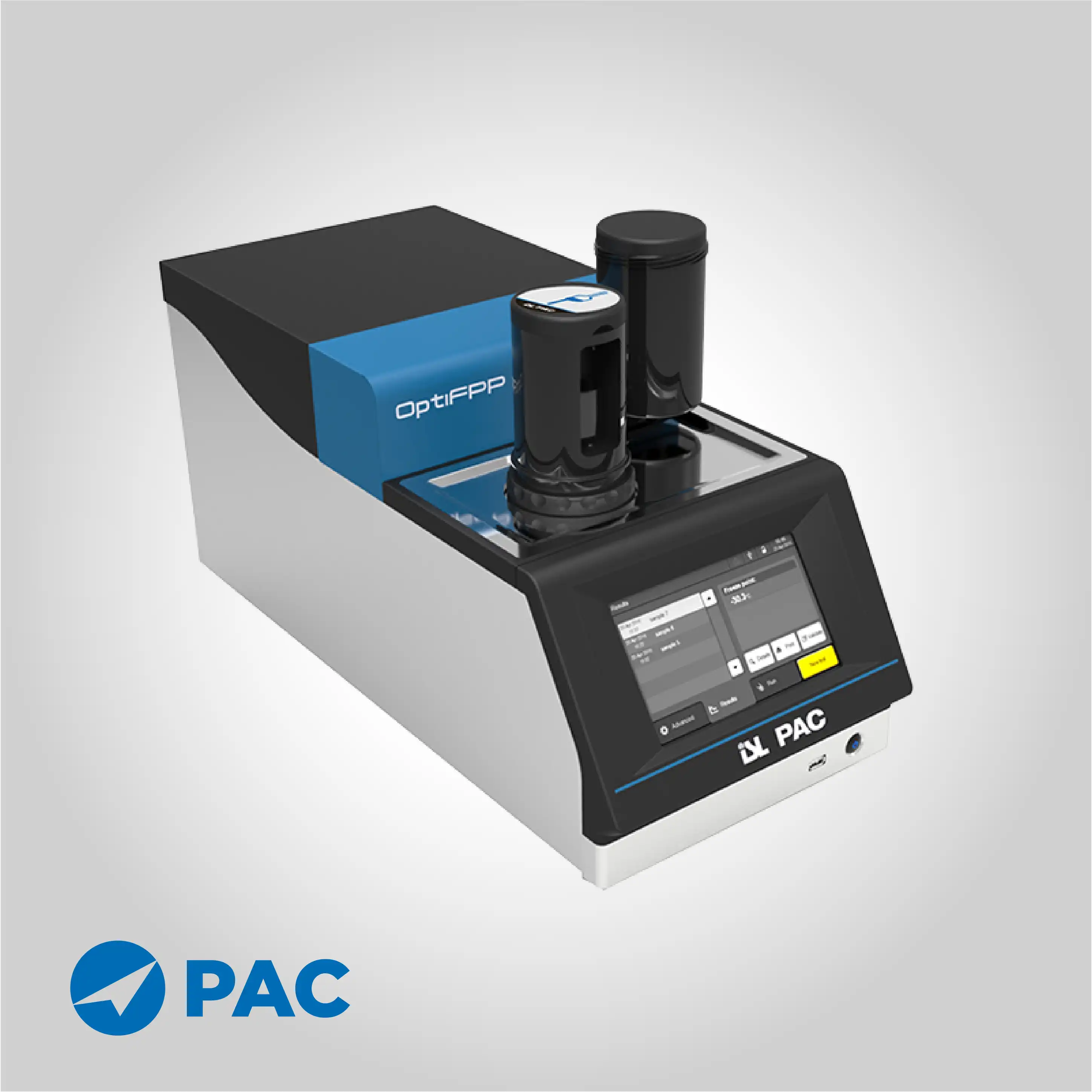
Cloud point testing is one of the most critical analyses in understanding the cold flow behavior of fuels and lubricants. It identifies the temperature at which wax crystals begin to form, which can negatively impact fluidity and performance. PAC offers advanced solutions to measure cloud points with high precision, ensuring products meet industry and environmental demands.
With PAC technologies, laboratories and refineries can accurately determine cloud point values to predict product performance under cold climate conditions. This helps prevent operational challenges such as filter plugging, reduced pumping efficiency, and flow blockages in pipelines.
Fundamental Significance of Cloud Point in Petroleum Products
The cloud point is a critical technical index for petroleum products and liquid fuels, representing the temperature at which a liquid specimen begins to show a "cloud" of wax crystals. Technically, this signifies the onset of crystallization of paraffinic or other sparingly soluble components. For the petroleum industry, knowing the cloud point is essential because these crystals can aggregate and lead to the clogging of fuel filters and fuel lines, causing engine malfunctions. PAC instruments are specifically designed to detect this initial stage of solid-phase formation with high sensitivity, providing a reliable measure of the product's utility in cold environments.
Advanced Optical Detection for Precise Crystal Identification
PAC utilizes a sophisticated optical detection mechanism to identify the exact moment crystallization begins. The technical process involves a light pulsed emission on the infrared (IR) spectrum through a coaxial fiber optic cable. As the sample is cooled, the system monitors the light scattering and reflection off the bottom of the test jar. The initial appearance of haziness or turbidity is detected fully automatically, eliminating the subjectivity associated with manual observation. This optical precision allows for a resolution of 0.1 C, ensuring that even the smallest clusters of hydrocarbon crystals are accounted for in the final report.
Integrated Cooling Technology for Ultra-Low Temperature Ranges
A major technical advantage of PAC Cloud Point analyzers is the revolutionary patented built-in cooling system. This technology eliminates the need for external liquid connections, bulky chillers, or toxic coolants. By providing a self-contained and controlled cooling environment, the system ensures that the sample follows a precise cooling rate (stepped or linear) as mandated by international test methods.
Application in Diesel and Biodiesel Blends
In the context of diesel and renewable fuels, the cloud point serves as a primary safety and quality parameter. Technical data shows that while petroleum diesel often has a significant gap between its cloud and pour points, biodiesel blends may have a much narrower margin. PAC's automated solutions are engineered to handle the unique crystallization profiles of various FAME (Fatty Acid Methyl Ester) concentrations. Accurate cloud point determination in these fuels is vital for preventing "freeze jamming" in machine parts and ensuring the reliability of compression-ignition engines in winter conditions.
Lubricants and Base Stock Oil Characterization
For lubricants and base stock oils, the cloud point indicates the lowest temperature at which the least soluble species begin to precipitate. From a technical perspective, this formation of wax residues can severely compromise the flow characteristics of the oil, leading to inadequate lubrication and increased wear on engine components. PAC analyzers provide the repeatability and reproducibility needed to certify these products for high-performance applications. The ability to test clear and transparent oils regardless of color ensures that additives and base oil variations do not interfere with the detection accuracy.
Compliance with Global Analytical Standards
PAC Cloud Point applications are strictly aligned with international standard test methods, including ASTM D2500, D5771, D5772, D5773, and ISO 3015. These standards define the specific thermal and optical parameters required for a valid test. By utilizing PAC instrumentation, laboratories ensure that their results are traceable and globally recognized. The systems are pre-programmed with these standardized methods but also offer 100% configurability for customized research and development profiles, allowing users to modify cooling rates and detection sensitivity as needed.
Data Management and Laboratory Efficiency through IRIS Software
The technical performance of PAC analyzers is enhanced by the integration of IRIS software, which allows for advanced laboratory result management. This software provides a centralized platform for connecting multiple instruments, monitoring test progress in real-time, and performing data reprocessing without the need to rerun samples. For cloud point applications, the software records the complete cooling curve and stores calibration data, supporting quality assurance protocols and facilitating easy data transfer to Laboratory Information Management Systems (LIMS).
Automation and Unattended Operation
The shift from manual cold bath methods to PAC's automated analyzers significantly improves laboratory throughput and data integrity. Automated operation involves simple "push a button" testing where the instrument manages the entire cooling and detection cycle. This technical automation reduces operator influence, minimizes handling errors, and eliminates the need for constant monitoring. The inclusion of ergonomic cordless heads and automated diagnostic functions ensures that the analyzer remains operational with high uptime, providing fast, actionable results for busy refining and testing facilities.
Read More About PAC Products Here
.webp)
.webp)



.webp)


.webp)

.webp)