




Freeze Point Application
|
Advanced Freeze Point Analysis for Fuels and Lubricants


PAC Freeze Point Application
Freeze point testing is a critical parameter in the analysis of fuels, particularly aviation turbine fuels, where safety and performance in extreme cold conditions are essential. The freeze point indicates the lowest temperature at which the fuel remains free from solid hydrocarbon crystals that could restrict flow or block filters in aircraft systems.
PAC’s freeze point testing solution delivers highly accurate, repeatable, and automated measurements that comply with international standards. It minimizes operator intervention, ensuring both reliability and efficiency in laboratory and refinery environments.
Critical Importance of Freeze Point in Aviation Safety
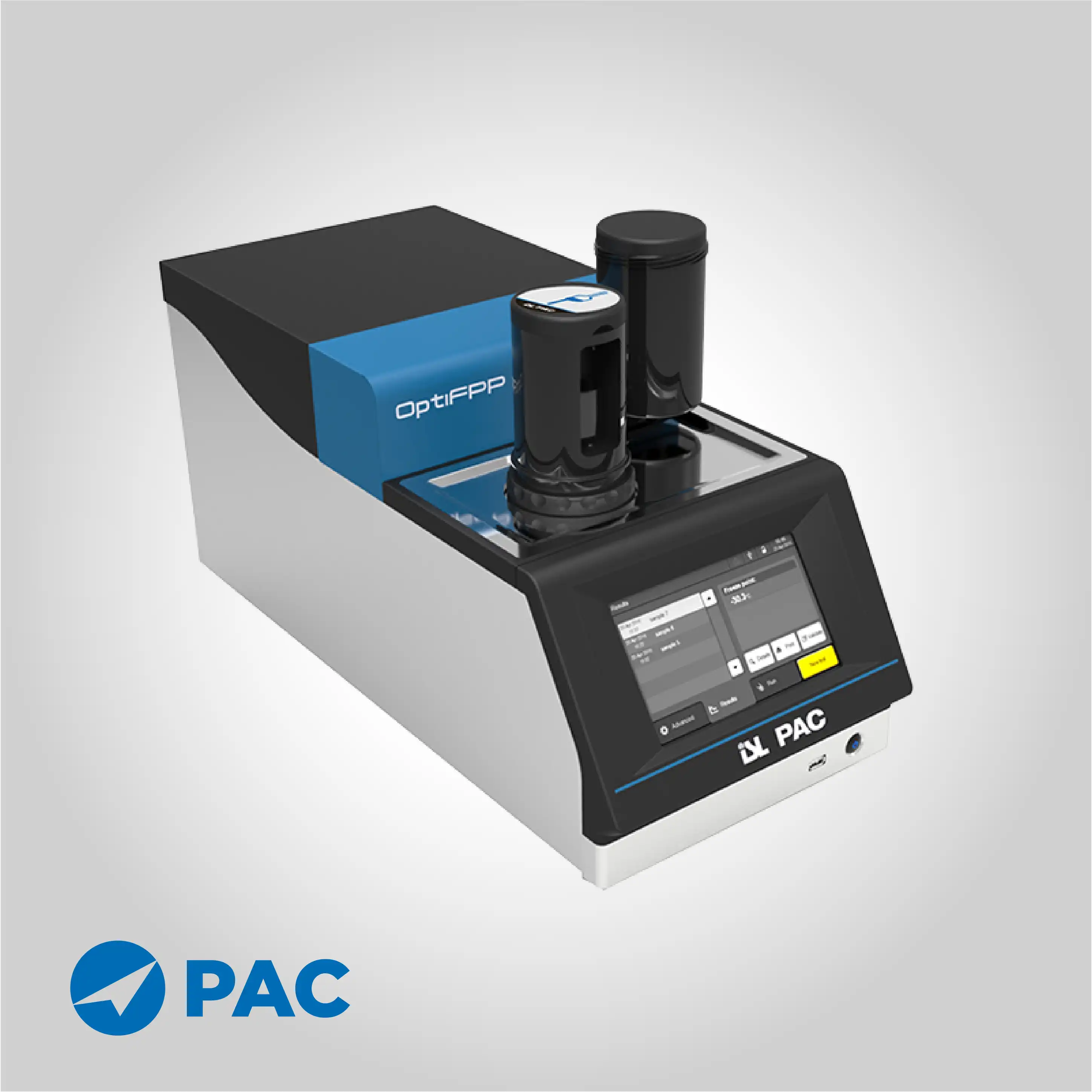
The freezing point is a paramount technical specification for aviation turbine fuels, as it defines the lowest temperature at which the fuel remains free of solid hydrocarbon crystals. In high-altitude flight, fuel temperatures can drop significantly; if crystals form, they can block fuel filters and lines, leading to engine fuel starvation. The PAC OptiFZP application is designed to identify this critical temperature with extreme precision, ensuring that jet fuels meet the safety margins required for international aviation transits.
Patented Integrated Cooling System
A standout technical feature of the OptiFZP is its patented, built-in cooling system. Unlike traditional methods that require external chillers or flammable refrigerants, this system is entirely self-contained. It is capable of cooling samples down to -100 C without any external liquid connections. This internal cooling ensures a highly controlled and reproducible cooling rate, which is essential for the accurate formation and subsequent melting of wax crystals during the freeze point determination process.
High-Speed Automated Testing Cycle
The OptiFZP is engineered for laboratory efficiency, offering a significantly faster testing cycle compared to manual or older automated methods. Technically, the system optimizes the cooling and heating phases to provide results in as little as 15 minutes. This high-speed performance does not compromise accuracy, as the microprocessor continuously monitors the sample's thermal profile. This rapid turnaround is particularly beneficial for refineries and airport laboratories where fast "pass/fail" decisions on fuel batches are required.
Advanced Optical Detection and Signal Analysis
The instrument utilizes a sophisticated optical detection system to monitor the phase change of the fuel. As the fuel is cooled, the system detects the very first appearance of hydrocarbon crystals through light scattering technology. Once the "cloud" of crystals is formed, the system begins a controlled warming phase to identify the exact temperature at which the last crystal disappears. This disappearance point is technically defined as the freezing point. The high resolution of the optical sensors ensures that even the most minute crystals are detected, providing a level of sensitivity far beyond manual observation.
Compliance with ASTM D7153 and Global Standards
The PAC OptiFZP application is strictly aligned with the ASTM D7153 and IP 529 test methods. These standards are recognized globally for the automated determination of freezing points in aviation fuels. By following these precise technical protocols, the OptiFZP ensures that the results are perfectly correlated with the manual ASTM D2386 method. This compliance is essential for fuel certification, ensuring that the data produced is accepted by regulatory bodies, airlines, and fuel suppliers worldwide.
One-Button Operation and Ease of Use
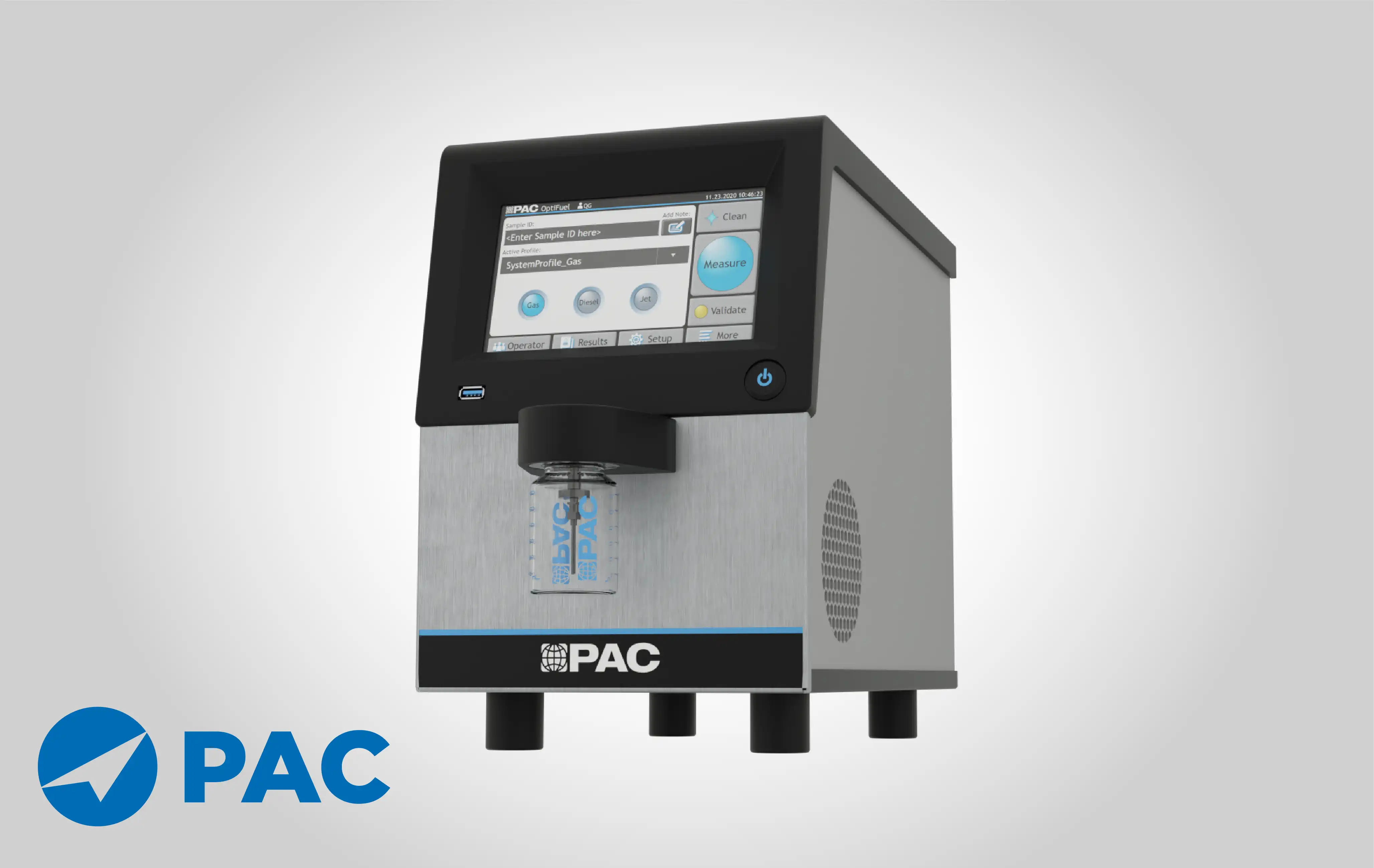
Technically, the OptiFZP is designed to minimize operator influence on the test results. It features a "one-button" start operation where the user simply loads the sample and initiates the test. The instrument automatically handles the cleaning, priming, and testing sequences. The inclusion of a cordless testing head and an intuitive touchscreen interface reduces the risk of mechanical errors and simplifies the training process for laboratory personnel, ensuring high-quality data regardless of the operator's experience level.
Superior Repeatability and Reproducibility
Precision is a core technical metric of the OptiFZP, which offers a repeatability of 0.5 C or better. By controlling every environmental variable, including the cooling rate and the optical sensitivity, the system ensures that the same sample will produce identical results across different instruments and locations. This reproducibility is vital for the global fuel supply chain, where fuel tested at a refinery must yield the same freeze point results when re-tested at a distribution terminal or airport.
Digital Traceability and LIMS Integration
The system provides comprehensive digital data management, recording the entire cooling and melting curve for every sample. This data is stored in a permanent electronic format, allowing for detailed audit trails and quality assurance reviews. The OptiFZP is designed for seamless integration with Laboratory Information Management Systems (LIMS), enabling the automated transfer of results. This technical connectivity reduces manual data entry, minimizes errors, and ensures that the refinery's quality control data is instantly accessible for operational decision-making.
Read More About PAC Products Here
.webp)
.webp)



.webp)


.webp)

.webp)