




FTIR Fuel Analysis
|
Rapid, Precise, and Automated Fuel Characterization
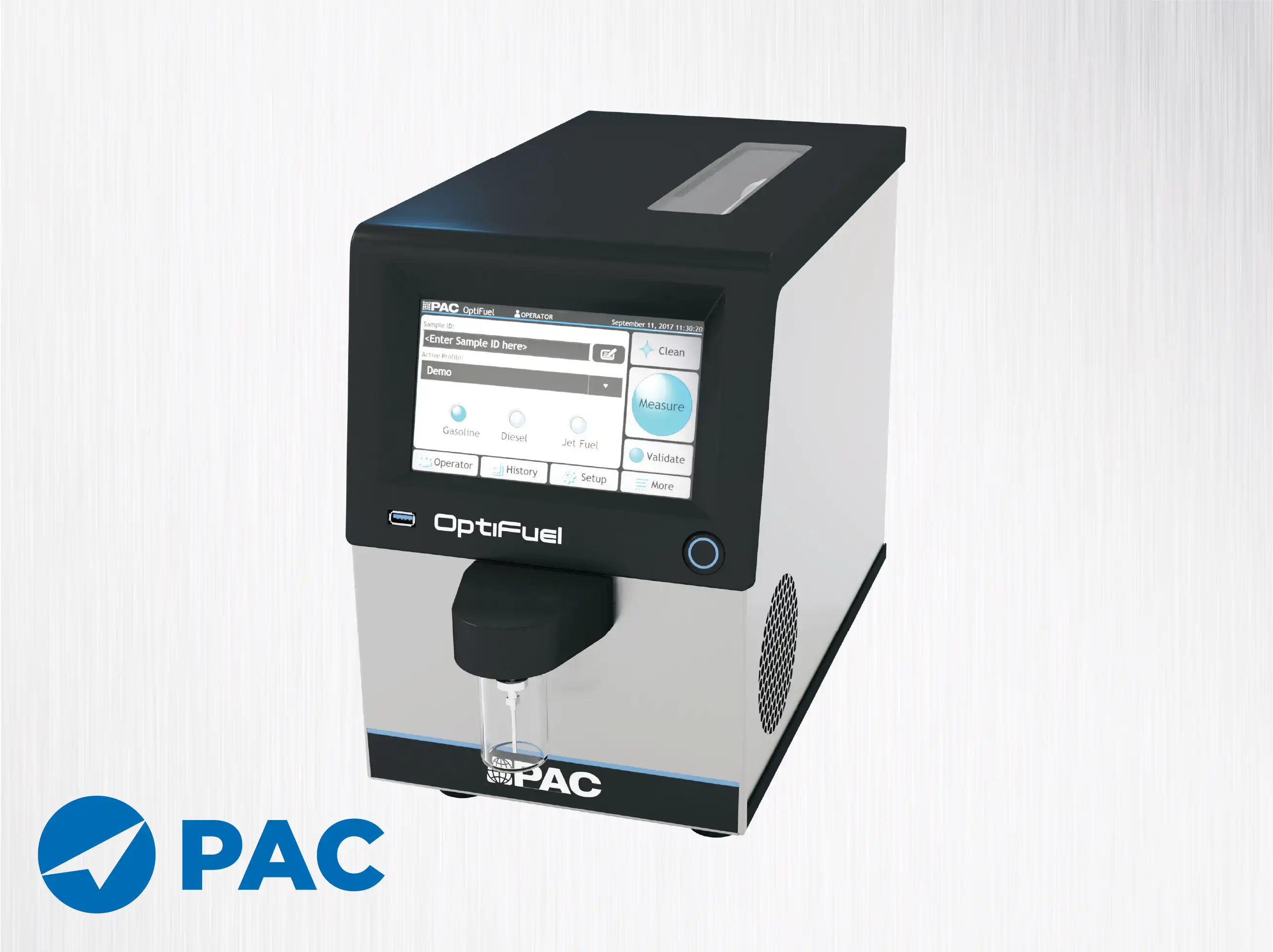


PAC FTIR Fuel Analysis
Fourier Transform Infrared (FTIR) Fuel Analysis provides rapid and precise determination of key fuel properties through advanced infrared spectroscopy. This method delivers comprehensive chemical profiling, identifying molecular structures and functional groups that define fuel quality, enabling laboratories and refineries to perform real-time analysis without extensive sample preparation or consumables.
Using FTIR spectroscopy, the system measures multiple parameters such as octane number, cetane index, aromatics, olefins, oxygenates, and distillation points from a single scan. The optical configuration and detector sensitivity ensure high-resolution spectral data, allowing accurate prediction of both physical and chemical characteristics essential for gasoline, diesel, and biofuel certification.
Comprehensive Multi-Parameter FTIR Spectroscopy
The PAC OptiFuel utilizes Fourier Transform Infrared (FTIR) spectroscopy to perform a non-destructive analysis of various fuel types. This technical approach allows the instrument to identify and quantify dozens of fuel properties simultaneously. By measuring the absorption of infrared light across a wide spectral range, the system can determine chemical concentrations and physical properties of gasoline, diesel, and jet fuel in less than a minute. This multi-parameter capability replaces several traditional, time-consuming laboratory tests with a single, high-speed scan.
Precision Measurement of Octane and Cetane Parameters
For engine performance evaluation, the OptiFuel provides highly accurate predictions of Research Octane Number (RON), Motor Octane Number (MON), and Cetane Index. Technically, the system correlates the specific infrared signatures of hydrocarbon chains and additives to these combustion characteristics. This allows refineries and blending facilities to monitor fuel quality in real-time without the need for expensive and maintenance-heavy CFR engines. The result is a highly repeatable and reliable assessment of the fuel’s anti-knock and ignition qualities.
Detailed Characterization of Aromatics and Oxygenates
A critical technical function of the OptiFuel is the quantification of aromatics, olefins, and oxygenated compounds. The FTIR engine is tuned to detect the unique vibrational frequencies of benzene, toluene, and various alcohols or ethers used as additives. This precision is essential for meeting environmental regulations that strictly limit the concentration of specific hazardous compounds in commercial fuels. The system provides a detailed breakdown of these chemical groups, ensuring that every batch of fuel meets the required regulatory profile.
Integrated Density Measurement via Oscillating U-Tube
Beyond chemical spectroscopy, the OptiFuel incorporates a built-in physical density meter based on oscillating U-tube technology. This allows the instrument to measure the density of the sample at a controlled temperature simultaneously with the FTIR scan. Technically, this integrated data is used to enhance the accuracy of the infrared predictions and to provide a complete physical-chemical profile of the fuel. The combination of optical and physical sensors makes the OptiFuel a versatile tool for comprehensive fuel characterization.
Advanced Biofuel Detection and Quantification
As the fuel market incorporates more renewable components, the OptiFuel is technically optimized to detect and quantify biofuel content, such as Ethanol in gasoline or FAME (Fatty Acid Methyl Esters) in diesel. The FTIR sensors identify the specific ester and hydroxyl groups associated with these biofuels, allowing for precise blending control. This capability ensures that biofuel concentrations remain within legal limits and that the final product maintains its intended performance characteristics across different seasonal blends.
Robust Design for Laboratory and Mobile Environments
The technical architecture of the OptiFuel is designed for durability, featuring a ruggedized optical system that remains stable even in challenging environments. The system includes an automated laser-controlled interferometer that maintains its alignment without manual intervention. This robustness makes the instrument suitable not only for fixed laboratories but also for mobile testing units and fuel inspection stations. Its compact footprint and resistance to vibration ensure high-quality spectral data wherever the testing is required.
Intuitive Interface and Sophisticated Data Processing
The instrument is operated via a high-resolution touchscreen interface that guides the user through the sampling process. Behind the interface, a powerful microprocessor runs sophisticated chemometric models to transform raw spectral data into actionable fuel properties. The system comes pre-loaded with extensive global calibration databases, which are technically refined using thousands of verified fuel samples. This ensures that the results are accurate across a wide variety of fuel origins and compositions without the need for complex local calibration.
Seamless Data Integration and Traceability
To support modern laboratory workflows, the OptiFuel provides comprehensive data management features. Every test result, including the full FTIR spectrum and all calculated parameters, is stored in a permanent digital record. The system is designed for seamless integration with Laboratory Information Management Systems (LIMS), allowing for the automated transfer of quality control data. This technical connectivity ensures full traceability, supporting compliance with ISO standards and facilitating rapid reporting for refinery operations and regulatory audits.
Read More About PAC Products Here
.webp)
.webp)



.webp)


.webp)

.webp)