




Precise Measurement of Noack Evaporation Loss
|
High-Temperature Volatility Testing for Lubricants


PAC Evaporation Loss
The Noack Evaporation Loss testing method is an essential procedure for measuring the high-temperature volatility of lubricants, base oils, and oil additives. This high-temperature lubricant evaluation is crucial in understanding how oils behave under extreme operating conditions, directly impacting engine efficiency, fuel consumption, and emission levels. By accurately determining the percentage weight loss of a sample, formulators can compare base oils and additive packages, ensuring consistent performance under thermal stress.
Maintaining a stable temperature-controlled environment at 250°C is a critical feature of the Noack method. This precise heating ensures repeatable and reliable results, adhering to globally recognized standards such as ASTM D5800 compliant evaporation test and CEC L-40-99 standard lubricant analysis. Accurate temperature control minimizes local overheating and guarantees that the measured mass loss reflects true oil volatility rather than test artifacts.
Significance of Noack Volatility in Lubricant Performance
The Noack evaporation loss test is a technically critical evaluation for engine lubricants, as it measures the mass of oil lost through evaporation at high temperatures. In modern internal combustion engines, oil is exposed to extreme heat, and if the lubricant is too volatile, it will evaporate, leading to increased oil consumption and thickening of the remaining fluid. This change in viscosity can impair lubrication efficiency and increase engine wear. PAC’s Noack solution provides the precise measurement needed to ensure that lubricants meet the stringent volatility limits set by original equipment manufacturers (OEMs).
Advanced Temperature Regulation and Metal-Free Heating
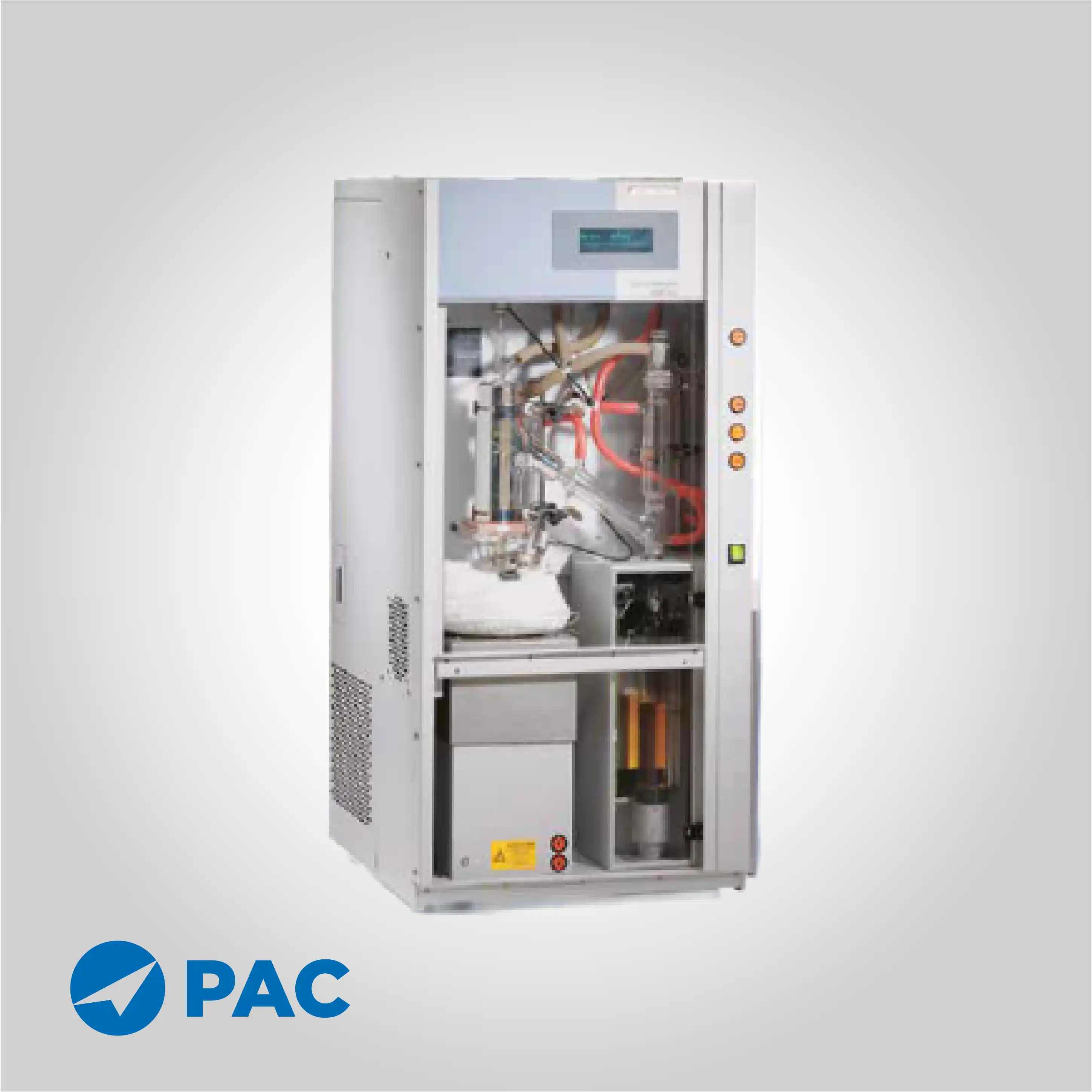
A primary technical feature of the PAC Noack tester is its advanced heating technology, which eliminates the need for hazardous Wood’s metal. Traditional methods used this toxic alloy as a heat transfer medium, but PAC utilizes a specialized heating block that ensures uniform thermal distribution around the sample crucible. The system is designed to maintain a constant temperature of 250 C with extreme stability. This "metal-free" approach not only enhances laboratory safety but also improves the response time of the temperature control loop, leading to more accurate results.
Precise Vacuum Control and Differential Pressure Management
The evaporation process is governed by a combination of high temperature and a constant vacuum. The PAC instrument features an integrated electronic vacuum controller that maintains a steady differential pressure (typically 20 mm $H2O throughout the duration of the test. Technically, this precise regulation is vital because even minor fluctuations in vacuum pressure can significantly alter the evaporation rate of the oil. The system automatically adjusts the vacuum to compensate for atmospheric changes, ensuring that every test is conducted under identical pneumatic conditions.
Automated Test Sequence and Process Monitoring
The PAC Noack tester is engineered for fully automated operation, covering the entire sequence from pre-heating to final cooling. Once the sample is loaded and the test is initiated, the microprocessor manages the heating ramp, the vacuum timing, and the specific 60-minute duration of the evaporation phase. This technical automation reduces the "hands-on" time for lab technicians and eliminates the variability associated with manual monitoring, ensuring that the test protocol is followed with 100 % consistency across different shifts and operators.
Compliance with Global Industry Standards
The instrument is technically optimized to comply with major international standards, including ASTM D5800 (Procedure B) and IP 421. These standards define the specific dimensions of the crucible, the required airflow, and the thermal profile. By adhering to these rigorous methods, PAC ensures that the data generated is legally and commercially valid for the certification of engine oils. This compliance is essential for refineries and lubricant blenders who must prove that their products meet international quality specifications like API or ACEA.
Safety Systems and Environmental Protection
Given the high temperatures involved in Noack testing, the PAC system incorporates multiple technical safety layers. It features an automatic overheat protection circuit and a failsafe mechanism that shuts down the heating and vacuum if a deviation is detected. Additionally, the system is designed to capture the evaporated oil vapors effectively, preventing them from being released into the laboratory environment. This emphasis on safety and environmental control makes the PAC Noack tester a robust choice for high-volume quality control laboratories.
Enhanced Data Traceability and Software Integration
The technical data produced during the Noack test is managed through a sophisticated software interface that provides real-time graphing of temperature and vacuum. The system records all parameters throughout the 60-minute run, creating a comprehensive digital record for every sample. This data can be seamlessly integrated into a Laboratory Information Management System (LIMS), supporting full traceability. This is particularly important for audit trails and for investigating any batches of oil that fall outside of the specified volatility range.
Reliability in Research and Quality Control
Beyond routine certification, the PAC Noack tester is a valuable tool for research and development of new lubricant formulations. Technically, the high repeatability of the system allows chemists to evaluate the impact of different base oils and additives on overall volatility. In a quality control setting, the instrument's durability and low maintenance requirements ensure high uptime. The ability to provide fast, reliable, and precise evaporation loss data directly supports the refinery's ability to optimize production and maintain the highest standards of lubricant performance.
Read More About PAC Products Here
.webp)
.webp)



.webp)


.webp)

.webp)