




Home » Products » Analytical Solutions » Automated Reactors & IN SITU » Mettler Toledo ReactIR In Situ Reaction Analysis
ReactIR
|
Stable, Scaleable, Consistent Process Development
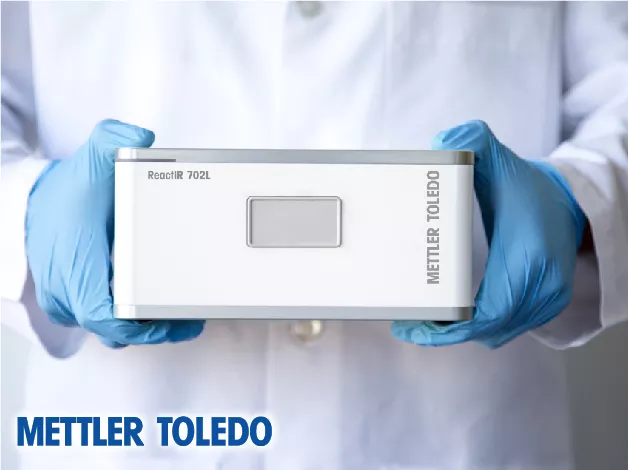
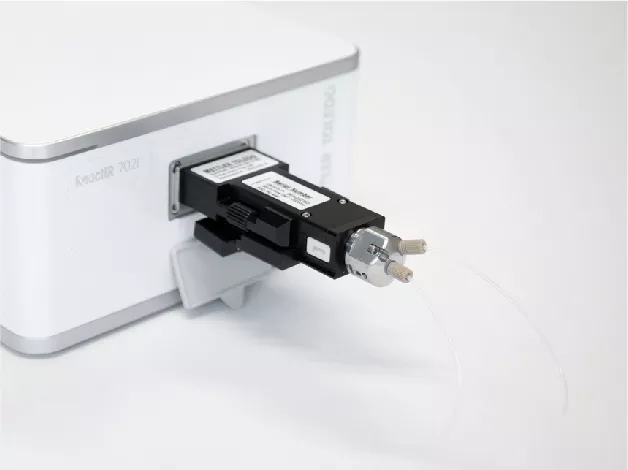
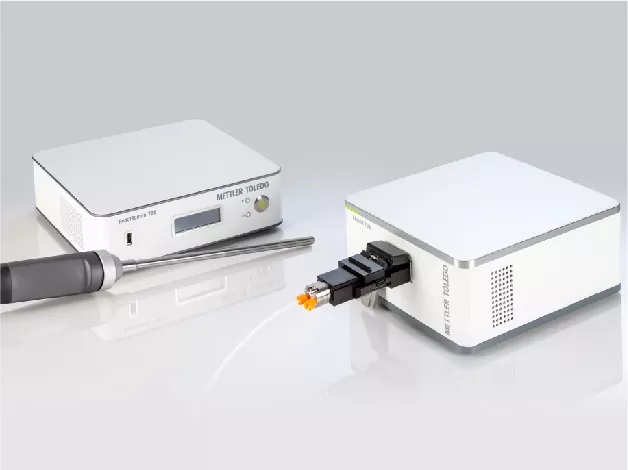
Mettler Toledo ReactIR In Situ Reaction Analysis
Mettler Toledo ReactIR is a sophisticated in situ FTIR (Fourier Transform Infrared) spectroscopy system designed for real-time monitoring and analysis of chemical reactions. Unlike traditional offline sampling methods, ReactIR utilizes specialized internal reflection sensors to track the concentration of reactants, intermediates, and products directly within the reaction vessel under actual process conditions.
This technical approach provides high-frequency data points that reveal reaction kinetics, mechanisms, and pathways, enabling scientists to optimize yields and ensure safety by identifying unstable intermediates or induction periods that are often missed by discrete sampling.From probe to detector to software, ReactIR is optimized for use in the mid-IR “fingerprint” region – resulting in a highly-sensitive system for fast and accurate molecular information.
Fundamental Principles of In Situ FTIR Spectroscopy
ReactIR technically operates on the principle of Mid-Infrared (Mid-IR) spectroscopy, utilizing the attenuated total reflection (ATR) technique to sample the reaction mixture. By placing a specialized probe directly into the liquid stream or vessel, the system measures the absorption of infrared light by specific chemical bonds. Each functional group vibrates at a characteristic frequency, creating a "molecular fingerprint." This allows the instrument to distinguish between closely related chemical species in real-time without disturbing the equilibrium of the reaction environment.
Real-Time Kinetic Profiling and Mechanistic Insight
The primary technical advantage of ReactIR is its ability to generate continuous kinetic profiles. Instead of taking manual samples for HPLC or GC analysis, which provide only snapshots, ReactIR captures spectra at intervals as short as seconds. This high-frequency data collection allows researchers to visualize exactly when a reaction starts, how fast it progresses, and when it reaches completion. Identifying induction periods, reaction rates, and the transient existence of reactive intermediates provides the mechanical insight necessary for deep process understanding.
Advanced Sampling Probes for Diverse Chemistries
ReactIR is supported by a variety of high-performance sampling interfaces, including diamond and silicon sensors, designed to withstand a wide range of chemical environments. These probes are engineered for compatibility with various temperatures and pressures, ranging from cryogenic conditions to high-pressure autoclaves. The technical robustness of the sensors ensures that the system can monitor aggressive chemistries, such as strong acids, bases, and pressurized hydrogenations, providing reliable data where traditional sampling is physically impossible or hazardous.
Integration with Flow Chemistry and Batch Processing
The system is technically versatile, supporting both traditional batch reactors and modern continuous flow chemistry setups. For flow chemistry, specialized micro-flow cells are utilized to monitor the reaction stream as it passes through the tubing. This allows for rapid screening of reaction conditions, such as residence time and temperature. In batch processing, the probe remains immersed in the vessel, providing a comprehensive history of the reaction from the initial charging of reagents to the final quench.
Identification of Short-Lived Intermediates and Transient Species
One of the most critical technical applications of ReactIR is the detection of unstable or short-lived intermediates. These species often exist only for a few minutes or even seconds and are easily destroyed during the process of manual sampling and dilution. Because ReactIR measures the reaction in situ, it can capture the appearance and disappearance of these transient molecules. This capability is essential for confirming proposed reaction mechanisms and for avoiding the buildup of energetic or hazardous intermediates that could lead to thermal runaway.
iC IR Software for Automated Data Analysis
The ReactIR system is powered by iC IR software, which provides sophisticated tools for data deconvolution and analysis. Technically, the software can automatically track changes in peak intensity or area and convert them into relative concentration profiles. Advanced algorithms like ConcIRT allow for the mathematical extraction of pure component spectra from complex mixtures without requiring prior calibration. This simplifies the interpretation of overlapping infrared peaks and enables the rapid identification of new or unexpected chemical species formed during the reaction.
Process Safety and Thermal Stability Monitoring
ReactIR plays a vital role in process safety by providing real-time data on the thermal behavior and stability of chemical reactions. By monitoring the conversion rates and the formation of byproducts, engineers can ensure that the reaction remains within safe operating limits. The software can be configured to alert users if the reaction rate exceeds a certain threshold or if the accumulation of reactants poses a safety risk. This technical oversight is a cornerstone of Process Analytical Technology (PAT) in modern pharmaceutical and chemical manufacturing.
Seamless Technology Transfer and Scale-Up
The data generated by ReactIR is instrumental in the scale-up process, facilitating the transition from laboratory-scale R&D to full-scale production. By understanding the critical parameters that influence reaction performance—such as mixing, heat transfer, and reagent addition rates—engineers can develop more robust processes. The technical consistency of FTIR data across different scales ensures that the chemical performance observed in a small flask can be reliably reproduced in a large industrial reactor, minimizing the risk of batch failures during technology transfer.
Read more about Mettler Toledo ReactIR In Situ Reaction Analysis
.webp)
.webp)
.webp)