.webp)
Precision Instrumentation
|
For Standardized Electrosynthetic Research

IKA Electrochemistry
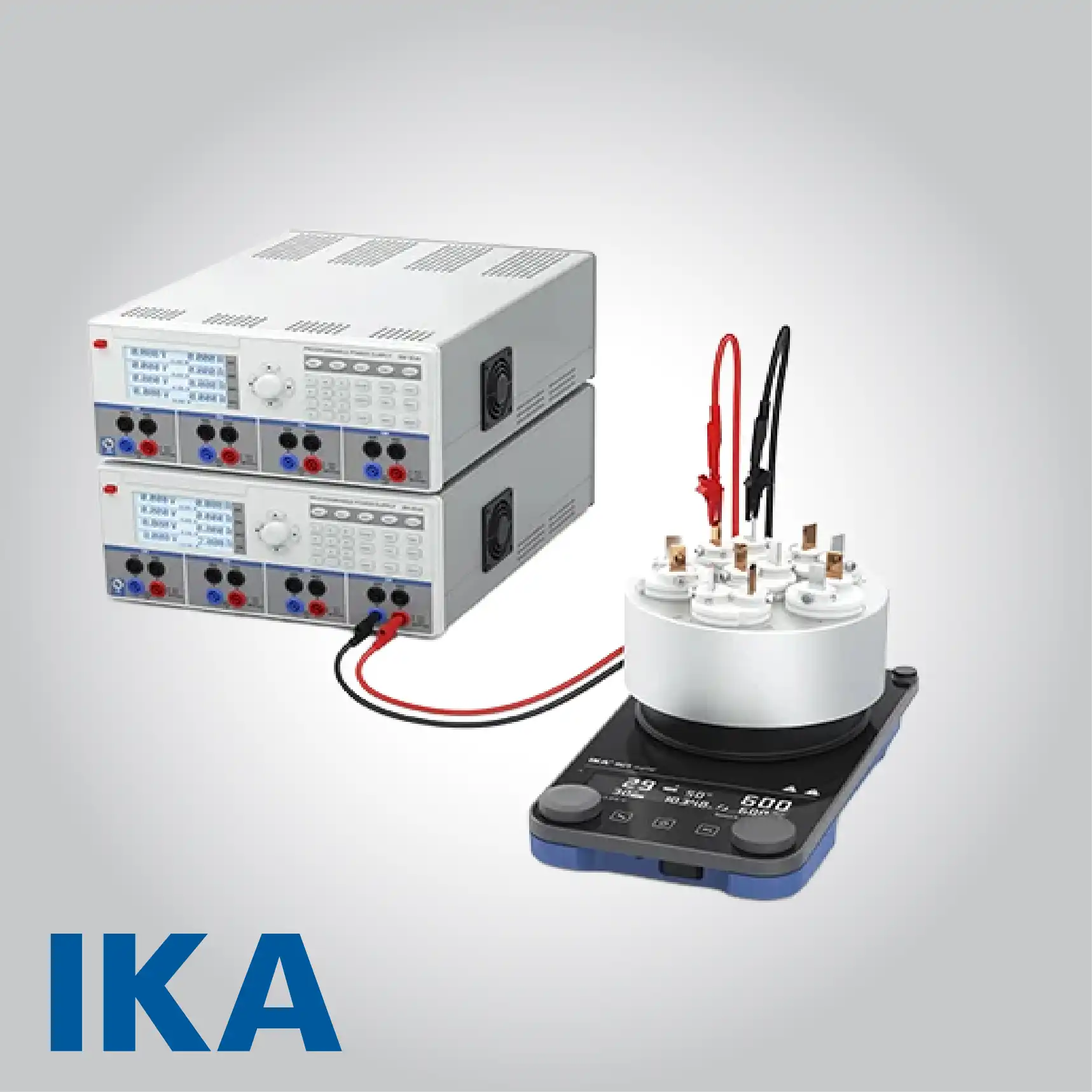
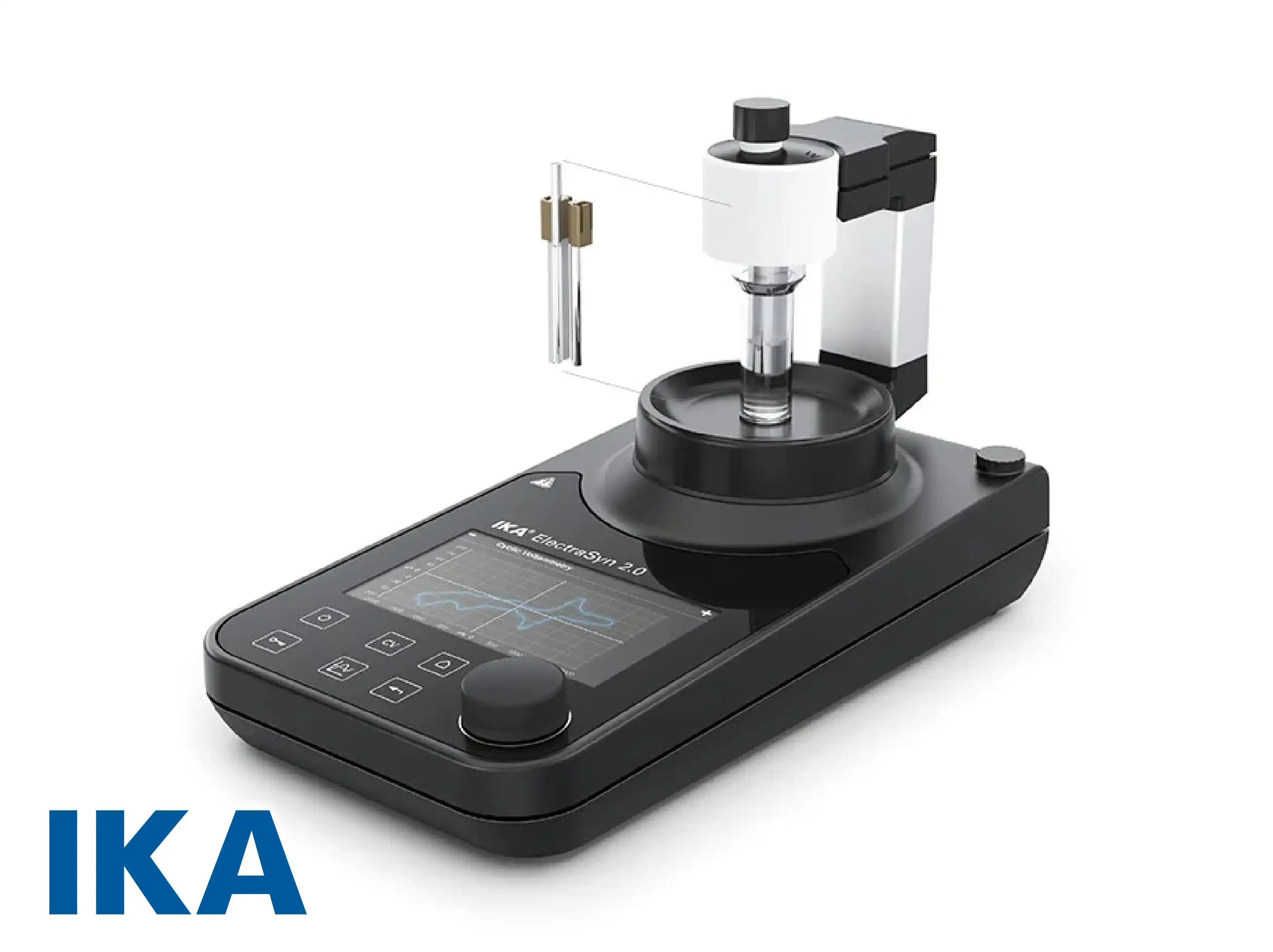
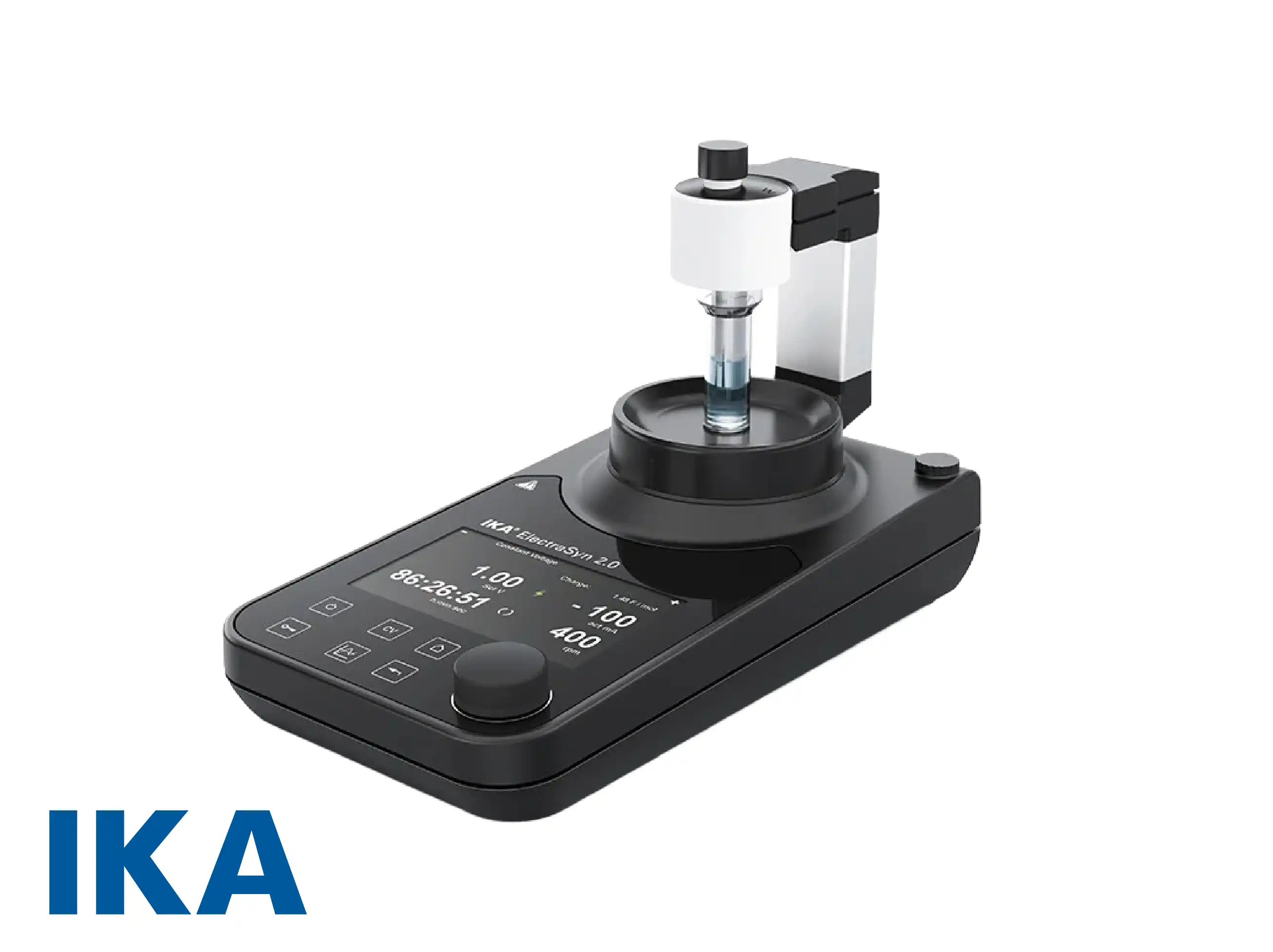
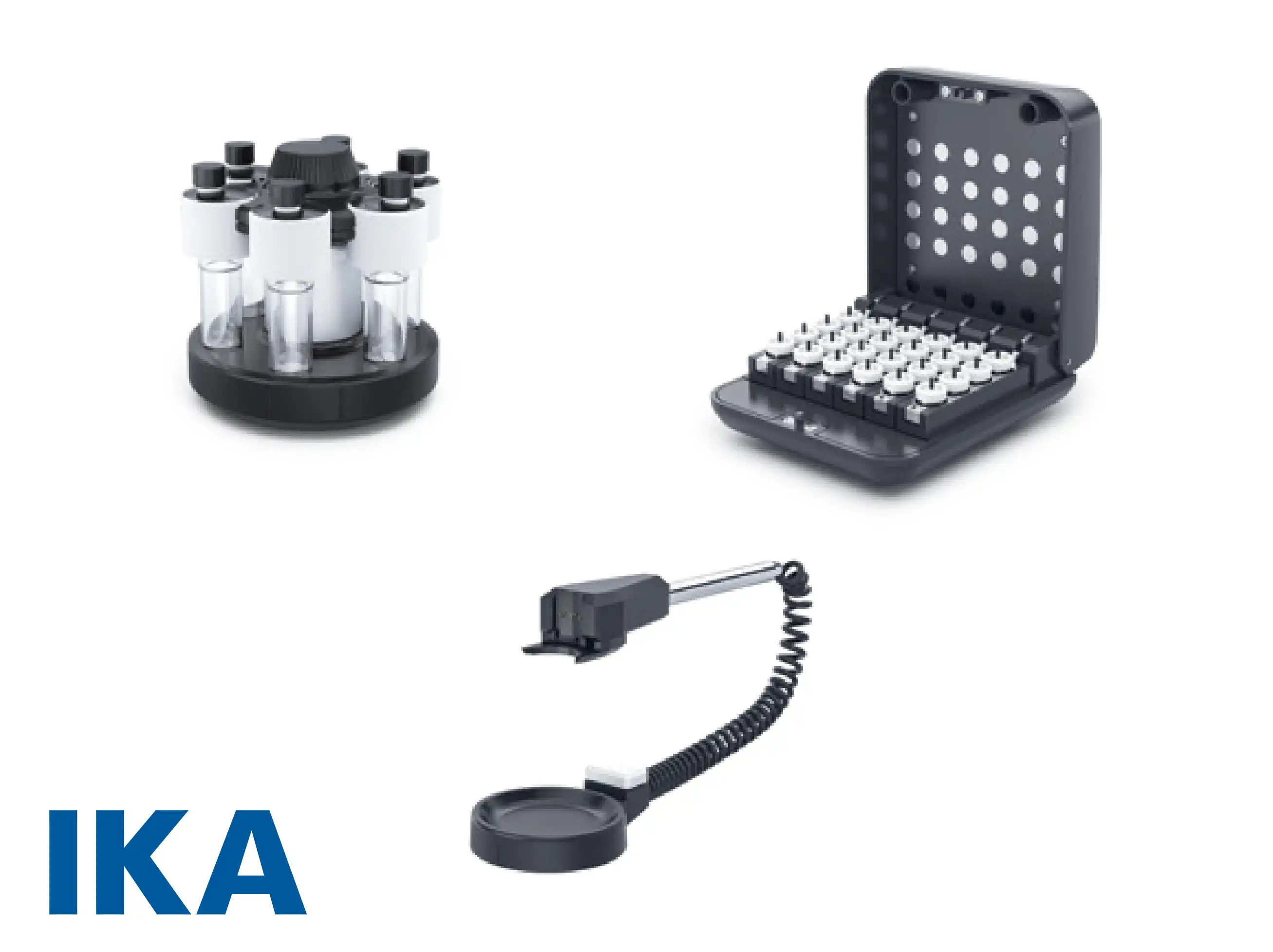
The adoption of electrochemistry in synthetic organic laboratories is technically facilitated by IKA’s commitment to hardware standardization. By replacing disparate, custom-built components with a singular integrated platform, IKA enables chemists to control the fundamental electrochemical variables—potential, current density, and mass transport—with high precision.
The system's technical architecture allows for the seamless transition between constant current (galvanostatic) and constant voltage (potentiostatic) modes, catering to a wide array of redox-active substrates. This level of technical control is essential for modern methodology development, where the nuances of electron transfer must be balanced with chemical kinetics to achieve high chemoselectivity and yield in complex molecular syntheses.
Potentiostatic vs. Galvanostatic Operational Modes
Technically, the choice between constant voltage and constant current is pivotal for reaction success. IKA instruments allow users to switch between potentiostatic and galvanostatic modes via a digital interface. Potentiostatic control is technically superior for reactions requiring high selectivity, as it prevents the oxidation or reduction of functional groups with higher redox potentials. Conversely, galvanostatic mode is often preferred for preparative synthesis due to its simplicity and consistent rate of electron delivery, ensuring a predictable reaction timeline.
Enhancing Mass Transport via High-Performance Stirring
Electrochemical reactions are technically limited by the diffusion of analytes to the electrode surface. IKA addresses this by integrating a high-performance magnetic stirrer directly into the electrochemistry unit. Technically, maintaining a high stirring speed (up to 1500 rpm) reduces the thickness of the Nernst diffusion layer, facilitating efficient mass transport. This ensures that the substrate concentration at the electrode surface remains high, minimizing side reactions and improving the overall Faraday efficiency of the synthetic process.
Material Properties of Glassy Carbon Electrodes
Glassy carbon is a technically vital electrode material due to its unique combination of glass-like and ceramic properties. It is non-porous, highly resistant to chemical attack, and provides a wide electrochemical window. Technically, its smooth surface prevents the adsorption of complex organic molecules, which can often "poison" other electrode types. This makes glassy carbon the technical standard for analytical cyclic voltammetry and for preparative reactions involving sensitive intermediates that require a clean, metal-free environment.
Surface Area Optimization with Reticulated Vitreous Carbon (RVC)
When high-throughput preparative synthesis is required, the surface area of the electrode becomes a critical technical parameter. Reticulated Vitreous Carbon (RVC) electrodes feature an open-pore, foam-like structure that technically provides a much higher surface-to-volume ratio compared to solid plates. This increased surface area allows for higher current densities without increasing the potential to a point where solvent decomposition occurs, technically accelerating the reaction rate while maintaining high selectivity.
Influence of Electrode Gap on Ohmic Resistance
Technically, the distance between the working and counter electrodes—known as the electrode gap—directly influences the internal resistance (R) of the cell. IKA’s standardized kits are designed with a fixed electrode distance to minimize ohmic drop ($iR$ drop). This technical design ensures that the actual potential at the electrode surface is as close as possible to the applied potential, reducing heat generation and ensuring that the electrical energy is efficiently directed toward the chemical transformation rather than being lost as heat.
Mechanistic Insights through Integrated Cyclic Voltammetry
Understanding the redox behavior of a new molecule is technically essential before starting a preparative run. The integrated cyclic voltammetry (CV) tool allows for the rapid determination of onset potentials. Technically, the system sweeps the potential and records the current response, producing a "duck-shaped" voltammogram. By analyzing the peak separation and peak current, chemists can technically deduce whether a reaction is reversible and identify the optimal voltage window for the subsequent synthetic experiment.
Safety Interlocks and Over-Current Protection
Working with high currents and flammable organic solvents requires rigorous technical safety measures. IKA electrochemistry units are equipped with electronic safety interlocks and over-current protection. Technically, if the system detects a short circuit or an unexpected surge in resistance (due to electrode fouling or solvent evaporation), it automatically terminates the current flow. This technical safeguard protects both the sensitive electronics of the potentiostat and the integrity of the chemical sample, preventing thermal runaway or hazardous conditions.
Digital Data Management and Mobile App Synchronization
Technically, modern electrosynthesis requires detailed logging of reaction parameters for GLP compliance. IKA systems sync with a mobile application via WiFi to provide real-time data visualization. This allows researchers to technically monitor the current/voltage curves throughout the duration of the reaction. The ability to export this data in digital formats is technically vital for method validation, allowing for the precise correlation between electrical parameters and chemical yield, which is essential for scaling up reactions to industrial levels.
Click here for more information about IKA range of products