
Home » Products » Chromatography/Mass Spectrometry » Columns, Consumables and Accessories » GL Sciences GC and GC/MS Capillary Columns
GC and GC/MS Capillary Columns
|
Precision Engineering for Complex Chemical Separations


.webp)
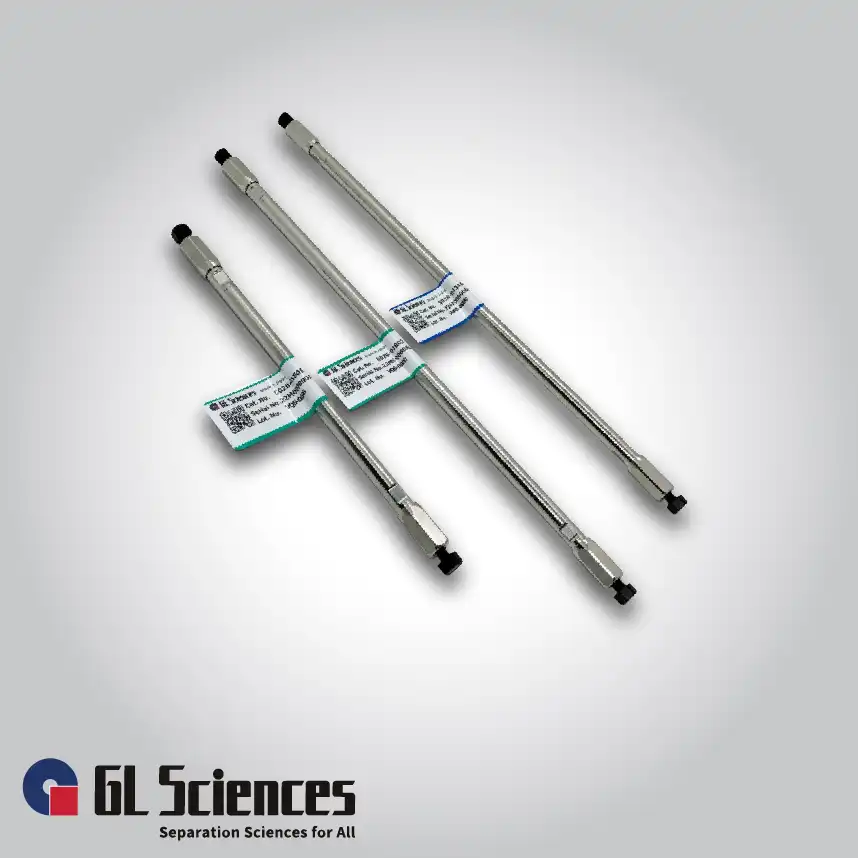
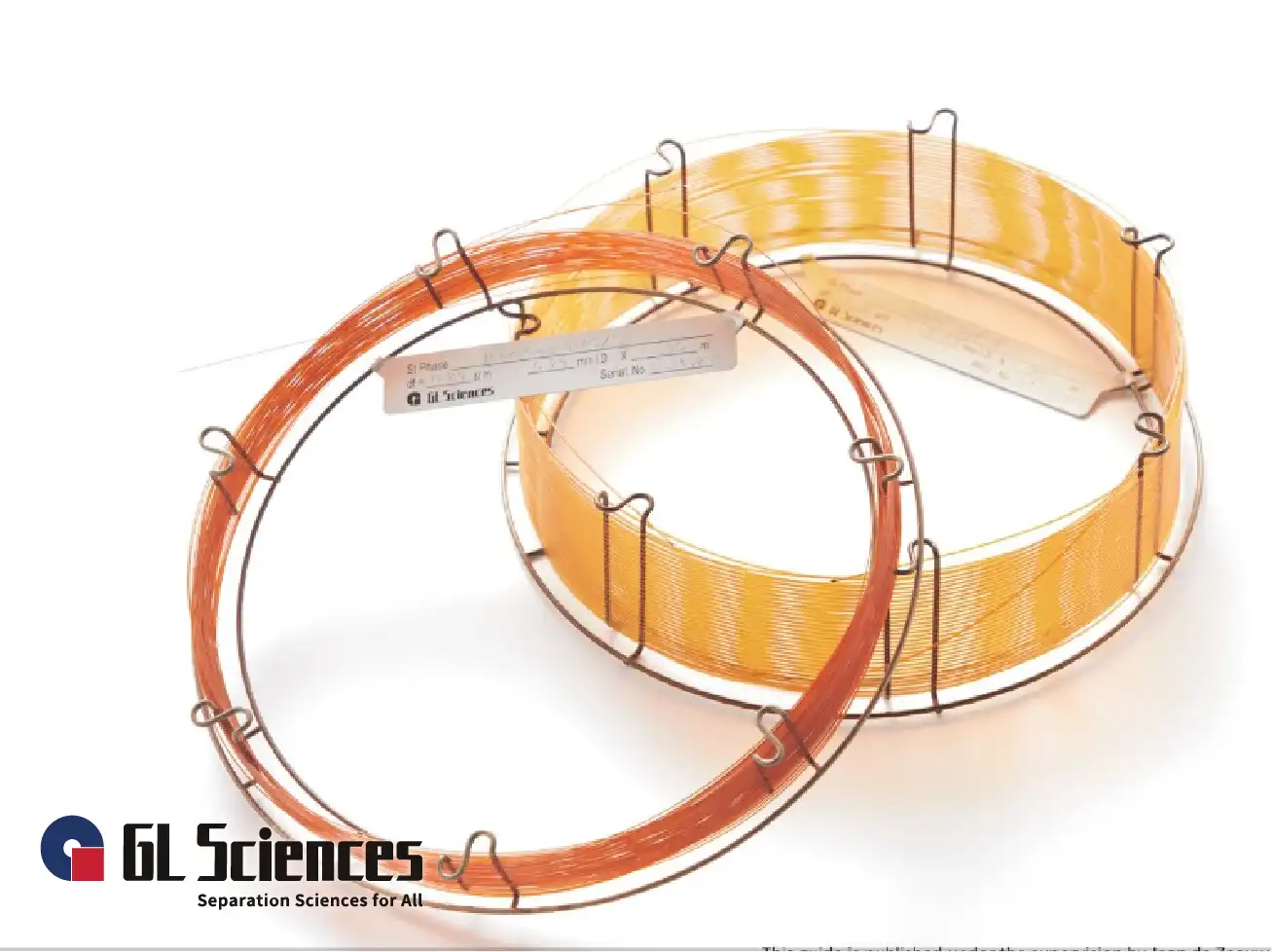
GL Sciences GC and GC/MS Capillary Columns
The technical portfolio includes various stationary phase chemistries, covering non-polar 100% dimethylpolysiloxane to highly polar polyethylene glycol (WAX) phases. These phases are cross-linked and chemically bonded to the inner wall of the fused silica tubing, ensuring high thermal stability and consistent performance across a wide temperature range. Additionally, GL Sciences provides specialized columns for specific regulatory methods, such as VOC analysis in water (AQUATIC series), pesticide screening, and amine analysis.
Each column is manufactured under strict ISO 9001 quality control and is delivered with an individual inspection report confirming its theoretical plate number, coating efficiency, and inertness through rigorous testing with sensitive compounds.
Surface Deactivation and High Inertness Technology
Technically, the performance of a GC column is defined by the quality of its internal surface. GL Sciences utilizes a proprietary deactivation process that targets and neutralizes halogenated residues, residual silanols, and trace metal ions on the fused silica. This treatment is technically vital for preventing the irreversible adsorption of active analytes. By creating a truly inert environment, the columns provide excellent peak symmetry for difficult compounds like primary amines and organic acids, which typically exhibit severe tailing on less inert stationary phases.
Ultra-Low Bleed for Enhanced GC/MS Sensitivity
In GC/MS analysis, column "bleed"—the thermal degradation of the stationary phase—creates unwanted background ions (such as m/z 207). Technically, GL Sciences minimizes this through advanced polymerization and cross-linking techniques. Lowering the bleed level directly improves the S/N ratio, which is crucial for trace-level quantification. These ultra-low bleed phases maintain baseline stability even at high temperatures, preventing source contamination in the mass spectrometer and ensuring accurate library matching of mass spectra.
Thermal Stability and High-Temperature Operation
Technically, the maximum operating temperature of a column limits its application range for high-boiling compounds. GL Sciences' capillary columns are engineered to withstand continuous operation at elevated temperatures (up to 350°C for certain phases) without losing phase thickness or selectivity. This thermal resilience is achieved by incorporating arylene groups into the polysiloxane backbone, which technically reinforces the polymer structure. This feature is essential for analyzing long-chain hydrocarbons, polymers, and high-molecular-weight pesticides.
Specialized Selectivity for Environmental VOC Analysis
For environmental applications like the analysis of Volatile Organic Compounds (VOCs) in water, GL Sciences provides specialized medium-polarity columns. Technically, these phases are optimized to resolve complex mixtures of halogenated solvents and aromatics that often co-elute on standard non-polar columns. The precise control over phase polarity allows for the separation of 33 or more compounds in a single run, meeting the stringent requirements of international environmental regulations while maintaining high separation efficiency.
Influence of Film Thickness on Sample Capacity and Retention
Technically, film thickness (df) is a critical parameter for optimizing resolution. Thicker films increase the sample capacity and retention of highly volatile gases, potentially eliminating the need for sub-ambient cooling. Conversely, thinner films are technically preferred for high-boiling analytes to reduce elution temperatures and minimize bleed. GL Sciences offers a wide range of film thicknesses (0.1 µm to 5.0 µm), allowing analysts to balance the trade-offs between retention, peak width, and thermal stability for specific applications.
Theoretical Plate Number and Separation Efficiency
The separation power of a capillary column is measured by the number of theoretical plates (N). Technically, GL Sciences achieves high N values (up to 300,000 or more) through precise control of the internal diameter and coating uniformity. According to the Van Deemter equation, a uniform stationary phase reduces mass transfer resistance ($C$ term). This ensures sharp peaks and high resolution, which are technically necessary for resolving closely eluting isomers in forensic and pharmaceutical screening.
Built-in Guard Columns for System Protection
To protect the analytical phase from non-volatile contaminants in the sample matrix, GL Sciences offers columns with built-in guard sections. Technically, these "ProGuard" columns consist of a deactivation-only segment integrated with the analytical column without any union. This design eliminates the risk of leaks and dead volumes associated with traditional connectors. This technical feature extends column lifetime significantly by trapping contaminants at the inlet before they can degrade the stationary phase.
Quality Assurance and Batch-to-Batch Reproducibility
Every GL Sciences capillary column undergoes rigorous quality testing to ensure batch-to-batch reproducibility. Technically, this includes measuring retention factors (k), coating efficiency (CE), and testing with a mixture of highly adsorptive probes. The stability of the retention factor (often within < 2.0% CV) is a technical guarantee that methods developed on one column lot will be directly transferable to another, reducing the time required for method re-validation in regulated laboratories.
Click here for more information about GL Sciences range of products