.webp)
Home » Products » Chromatography/Mass Spectrometry » Elemental Analysis » Shimadzu Wavelength Dispersive X-ray Fluorescence Spectroscopy
X-ray Fluorescence Spectroscopy
|
High-Resolution Wavelength Dispersive X-ray Fluorescence Analysis
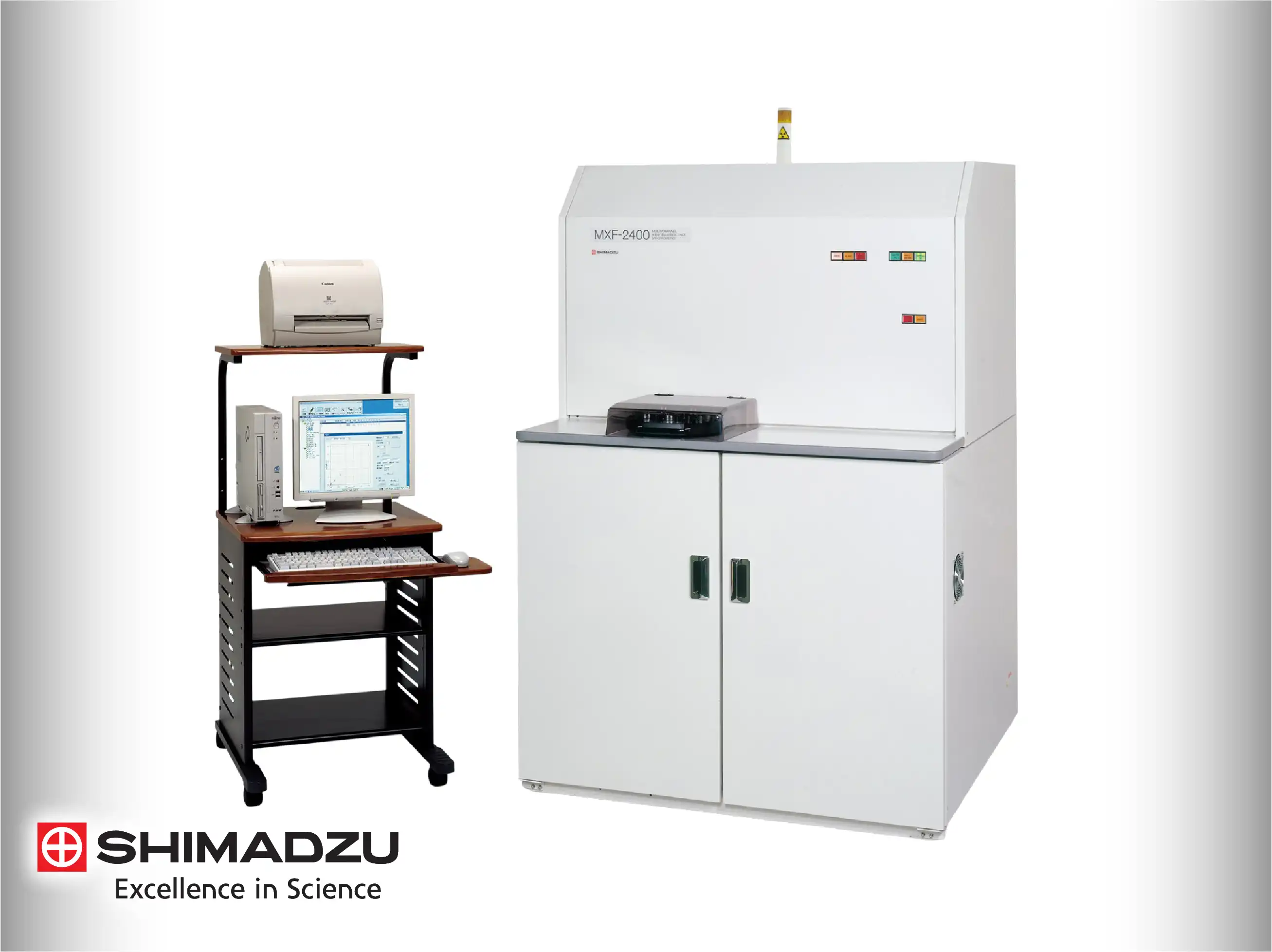
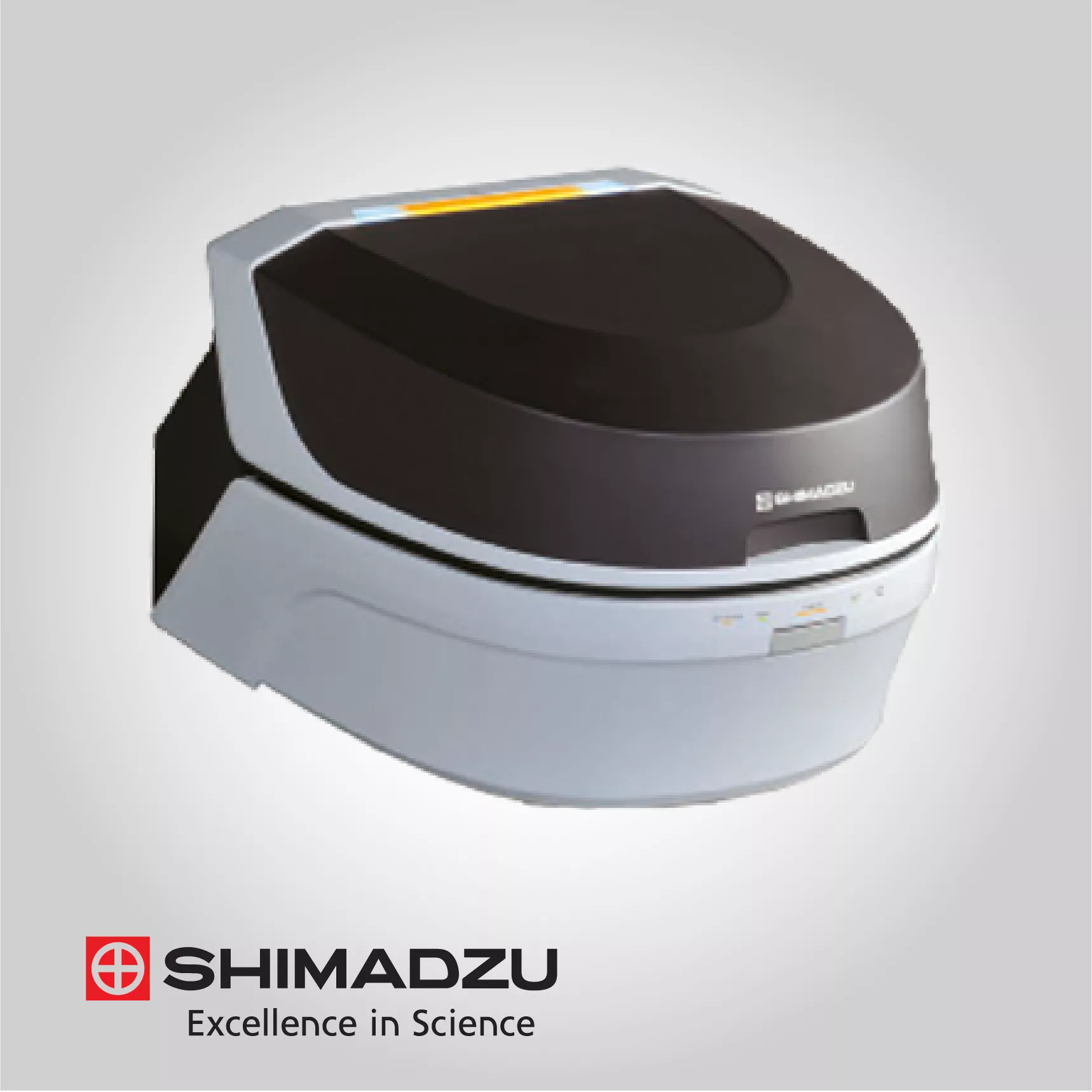
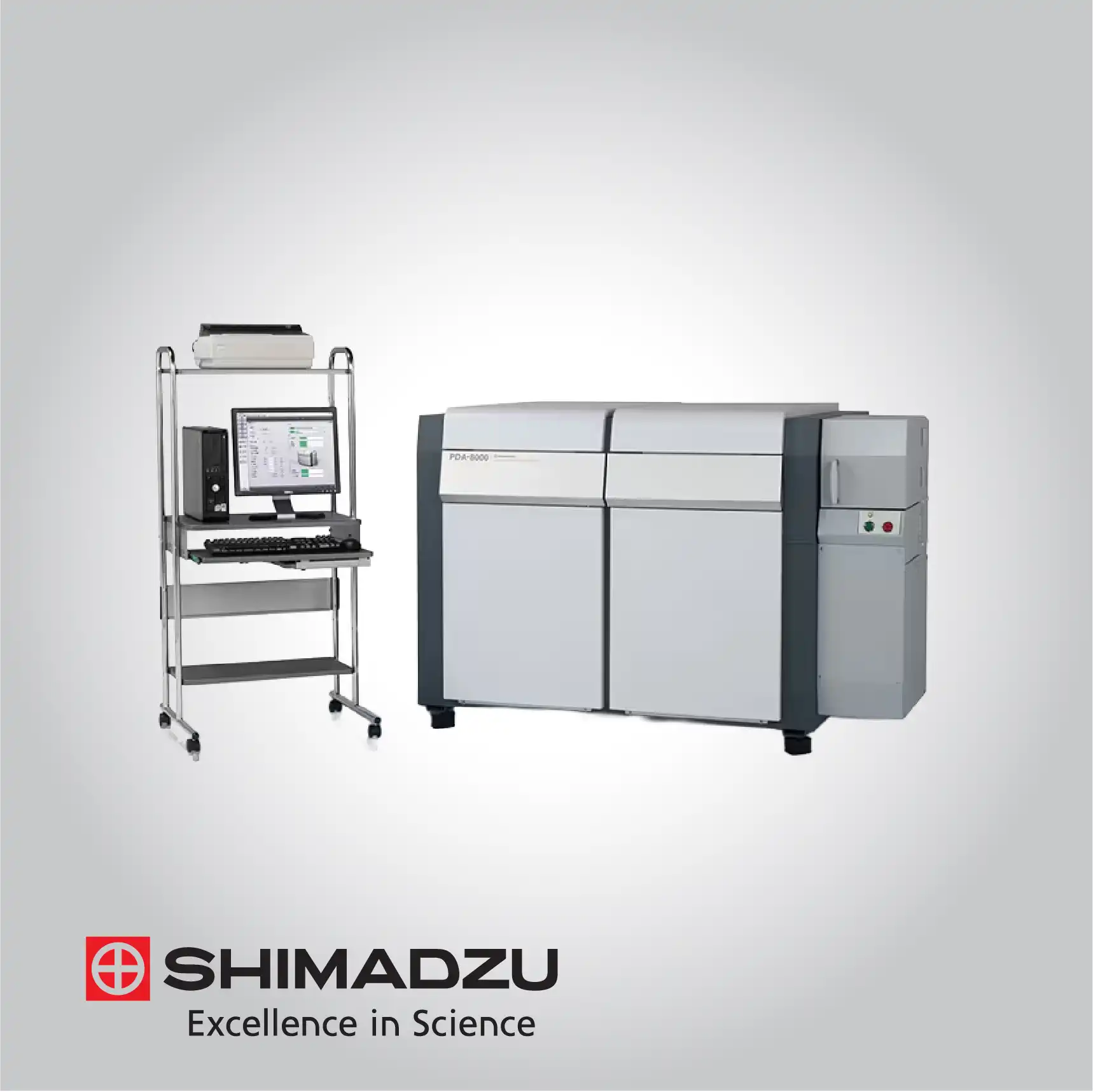
Shimadzu Wavelength Dispersive X-ray Fluorescence Spectroscopy
The technical architecture of Shimadzu’s WDXRF systems is built around a precision-engineered goniometer and high-stability X-ray generators. These systems feature a variety of analyzing crystals and primary beam filters that can be automatically switched to optimize the detection of specific elements within a complex matrix.
Technically, the integration of thin-window X-ray tubes and specialized detectors ensures linear response and high sensitivity across the entire periodic table. With advanced software for background correction and quantitative modeling, WDXRF provides the robust data integrity required for both high-throughput process control and specialized academic research.
High-Resolution Spectral Separation via Bragg’s Law
The technical core of Wavelength Dispersive X-ray Fluorescence (WDXRF) is the physical separation of X-ray wavelengths before they reach the detector. Utilizing a precision goniometer, the system positions an analyzing crystal to diffract X-rays according to Bragg’s Law. This mechanical dispersion allows the instrument to isolate specific spectral lines with far greater resolution than energy-dispersive systems, effectively eliminating peak overlaps between adjacent elements in the periodic table.
High-Power Excitation for Ultra-Trace Sensitivity
To achieve detection limits in the sub-ppm range, WDXRF systems utilize high-power X-ray tubes, typically ranging from 1 kW to 4 kW. This high-wattage excitation generates a massive flux of primary X-rays, ensuring that even trace amounts of an element produce enough fluorescent signal for accurate quantification. Technically, this makes WDXRF the preferred choice for detecting low-level impurities in high-purity metals and chemical reagents.
Optimized Light Element Analysis from Beryllium to Sodium
WDXRF is technically superior in the analysis of light elements. By employing ultra-thin window X-ray tubes and specialized, high-sensitivity synthetic multilayer crystals, the system can detect elements as light as Beryllium. To prevent the absorption of these low-energy X-rays by air, the entire optical path is maintained under a high vacuum, ensuring that the faint signals from light atoms reach the detector with minimal attenuation.
Dual Detection Systems for Full-Spectrum Coverage
To capture the full range of elemental energies, WDXRF spectrometers employ two distinct types of detectors. A flow proportional counter (FPC), utilizing a thin window and P10 gas, is technically optimized for long-wavelength (low energy) X-rays from light elements. Conversely, a scintillation counter (SC) is used for the high-energy, short-wavelength X-rays emitted by heavier elements. The software automatically switches between these detectors to maximize sensitivity for each analyte.
Precision Goniometer Mechanics and Angular Accuracy
The accuracy of a WDXRF measurement is technically dependent on the mechanical precision of the goniometer. This device controls the synchronized rotation of the sample, the analyzing crystal, and the detector. Modern systems utilize high-resolution encoders to ensure angular reproducibility. This precision ensures that the system returns to the exact Bragg angle for every measurement, maintaining long-term stability and calibration consistency.
Advanced Primary Beam Filtering and Background Reduction
To enhance the signal-to-noise ratio, the system incorporates an automated primary beam filter changer. These filters are technically placed between the X-ray tube and the sample to suppress the characteristic lines of the tube's anode material (e.g., Rhodium or Tungsten) and to reduce background scatter. By refining the excitation spectrum, the system can significantly lower detection limits for specific target elements in complex matrices.
Fundamental Parameter (FP) Method for Matrix Correction
Quantification in WDXRF is technically supported by the Fundamental Parameter (FP) method. This mathematical approach uses theoretical physical constants to calculate concentrations. The FP method accounts for "matrix effects," where one element absorbs or enhances the signal of another, allowing for accurate analysis of unknown samples even when matching standards are unavailable.
Automated Multi-Crystal Turrets for Versatility
A technical feature of high-end WDXRF systems is the automated crystal turret, which can house up to ten different analyzing crystals. Depending on the element being analyzed, the software automatically selects the crystal with the optimal interplanar spacing (d-spacing). This allows the instrument to transition seamlessly from analyzing heavy metals in steel to detecting light oxides in cement, providing a versatile platform for diverse industrial applications.
Click here for more information about Shimadzu range of products