.webp)
Home » Products » Chromatography/Mass Spectrometry » Liquid Chromatograph-Mass Spectrometry » Shimadzu Quadrupole Time-of-Flight LC-MS/MS
Quadrupole Time-of-Flight LC-MS/MS
|
Accelerate Discovery


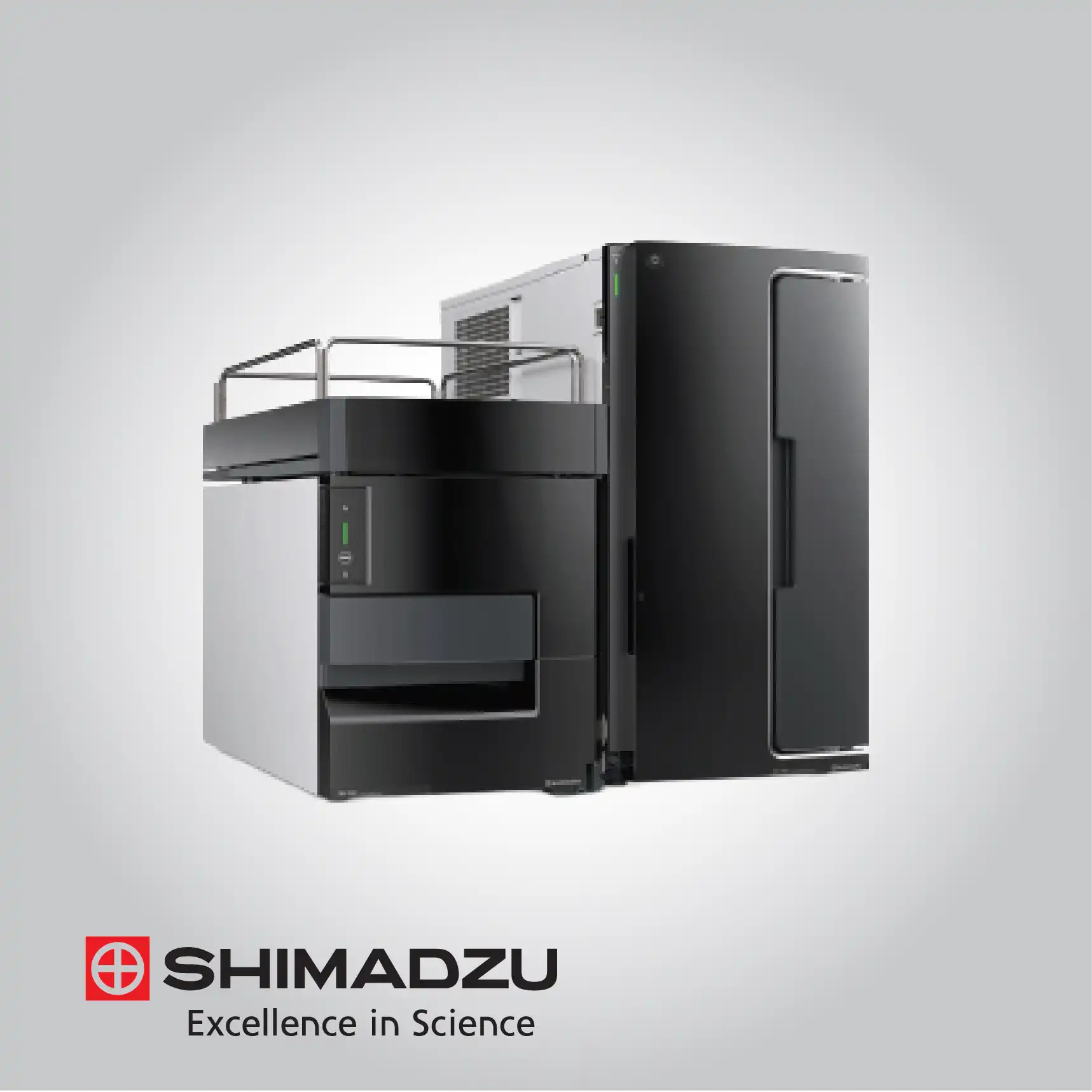
Shimadzu Quadrupole Time-of-Flight LC-MS/MS
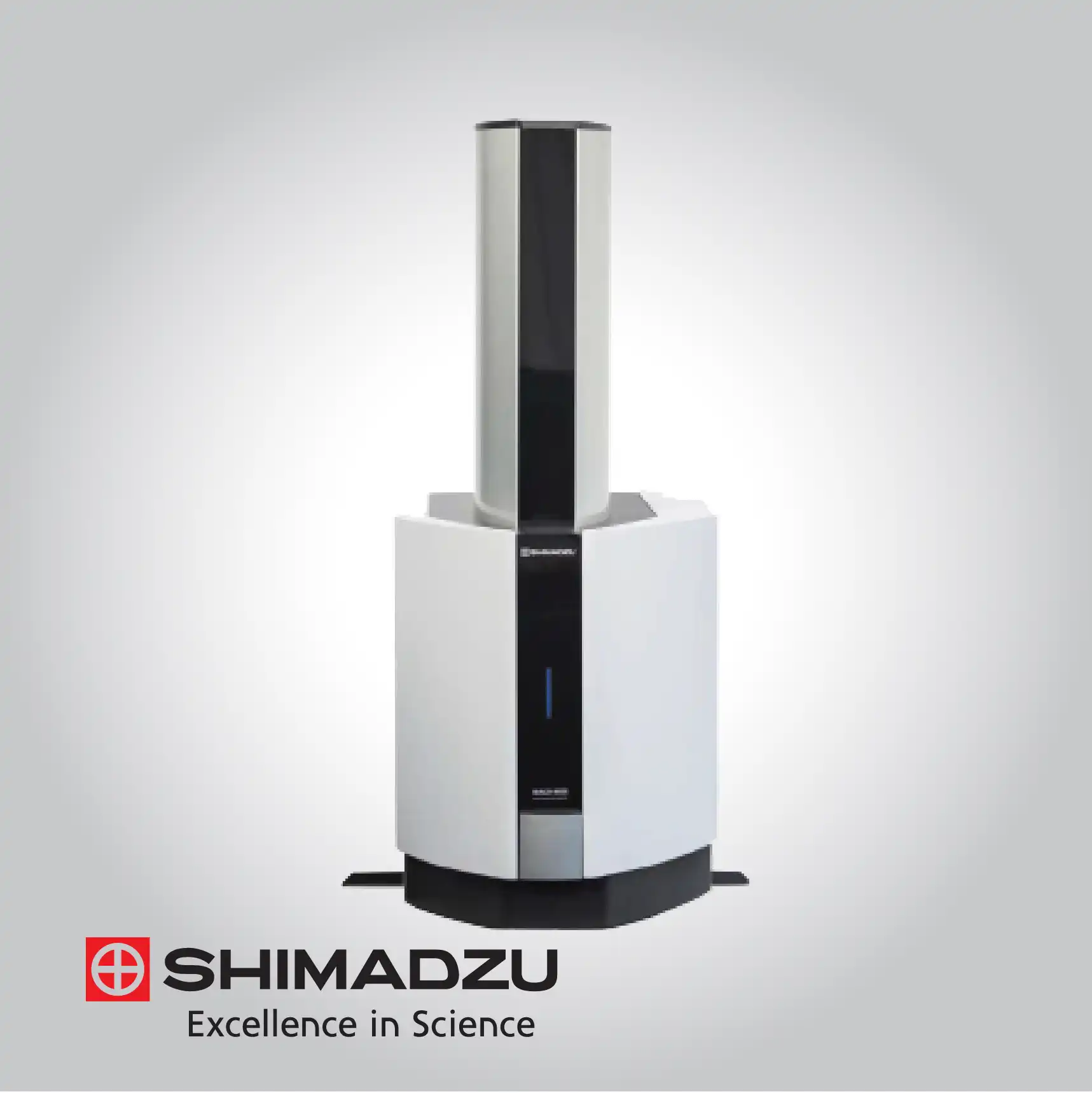
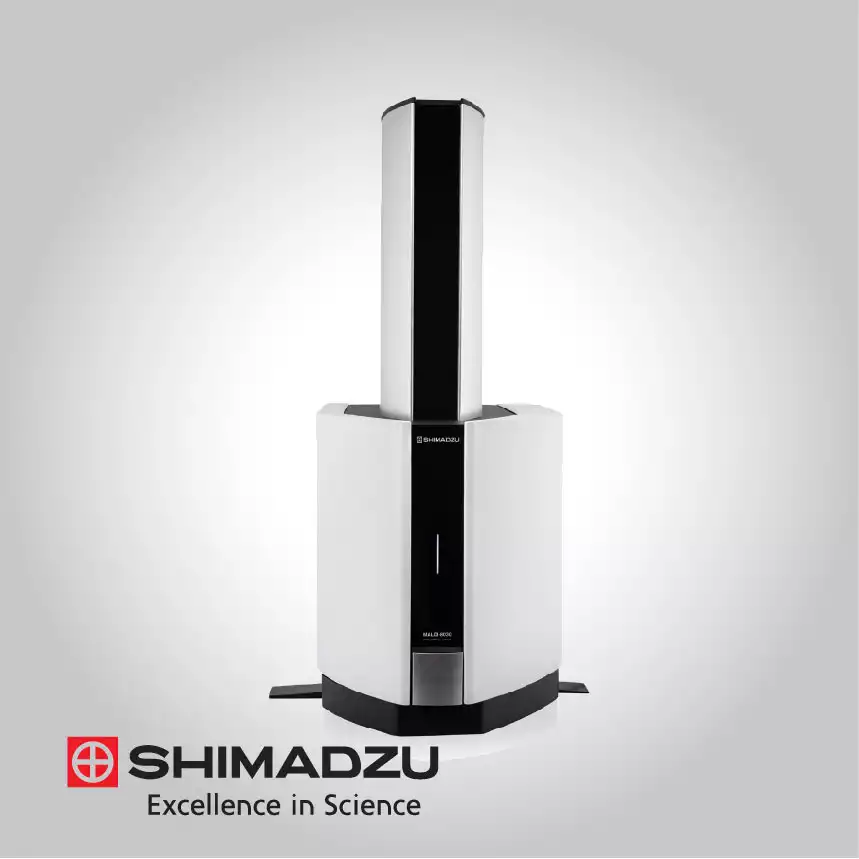
Shimadzu’s Quadrupole Time-of-Flight (Q-TOF) LC-MS/MS systems represent the pinnacle of high-resolution accurate mass (HRAM) technology, specifically engineered to provide deep insights into complex molecular structures. Technically, these instruments integrate a high-stability quadrupole for precursor ion selection with a flight tube designed for exceptional mass resolution and accuracy.
By utilizing high-speed data acquisition and advanced ion focusing optics, the Q-TOF platforms deliver the sensitivity required for trace analysis alongside the resolution needed to distinguish between compounds with nearly identical masses. This synergy of speed and precision makes these systems ideal for non-targeted screening, metabolomics, and the detailed characterization of biopharmaceuticals.
High Mass Resolution and Accurate Mass Measurement
The Q-TOF system is technically designed to provide exceptional mass resolution, enabling the separation of isobaric compounds that differ only slightly in their exact mass. This high resolution is maintained across a wide mass range, ensuring that both small molecules and large biomolecules can be characterized with precision. Accurate mass measurements allow for the determination of elemental compositions with high confidence, which is a fundamental requirement for the identification of unknown substances in forensic, environmental, and natural product research.
High-Stability TOF Flight Tube and Temperature Control
To achieve consistent mass accuracy over extended periods, Shimadzu utilizes a high-stability flight tube integrated with advanced temperature control systems. Technically, even minor fluctuations in ambient temperature can affect the flight path of ions, leading to mass drift. By maintaining the internal flight tube at a constant temperature, the system ensures that the time-of-flight measurements remain stable, reducing the need for frequent re-calibration and ensuring the reliability of data throughout long sample batches.
Ultra-Fast Data Acquisition for UHPLC Compatibility
The Q-TOF hardware is engineered for ultra-fast data acquisition, making it perfectly compatible with the narrow peaks generated by ultra-high-performance liquid chromatography (UHPLC). Technically, the system can capture a high number of spectra per second without sacrificing mass resolution or accuracy. This high speed is critical for data-dependent acquisition (DDA) workflows, where the system must rapidly switch between MS and MS/MS modes to capture fragment information for as many precursor ions as possible during a single chromatographic run.
Efficient Ion Focusing and High-Sensitivity Interface
The ion optics within the Q-TOF are technically optimized to focus and transmit ions with maximum efficiency. Starting from the heated ESI probe, the system uses a series of ion guides and focusing lenses to direct the ion beam into the mass analyzer while removing neutral contaminants and solvent droplets. This high transmission efficiency results in superior sensitivity, allowing for the detection and identification of trace-level components in complex biological or food matrices.
Advanced Collision Cell for Information-Rich MS/MS
The collision cell in Shimadzu's Q-TOF is designed to facilitate high-efficiency fragmentation of precursor ions. By precisely controlling collision energy, the system produces information-rich MS/MS spectra that provide structural clues for compound identification. The collision cell is technically engineered to rapidly clear fragment ions, preventing crosstalk and ensuring that high-quality spectra are obtained even during high-speed acquisition sequences.
Wide Dynamic Range for Comprehensive Quantitation
A key technical attribute of the Q-TOF system is its wide dynamic range, which allows for the simultaneous quantitation of both high-abundance and low-abundance compounds. The detector and acquisition electronics are engineered to handle high ion counts without saturation, maintaining linearity over several orders of magnitude. This capability is essential for applications like metabolomics and impurity profiling, where target analytes may be present at vastly different concentration levels within the same sample.
Analytical Intelligence for Automated Method Development
Shimadzu integrates "Analytical Intelligence" to automate and simplify the method development process for Q-TOF analysis. Technically, the software can automatically optimize parameters such as collision energy and ion source settings based on the target analytes. Automated system check functions monitor the instrument's health and calibration status, ensuring that the system is always operating at peak performance before starting an analysis. This reduces the technical burden on the user and improves the consistency of the results.
Robust Software for Data Processing and Identification
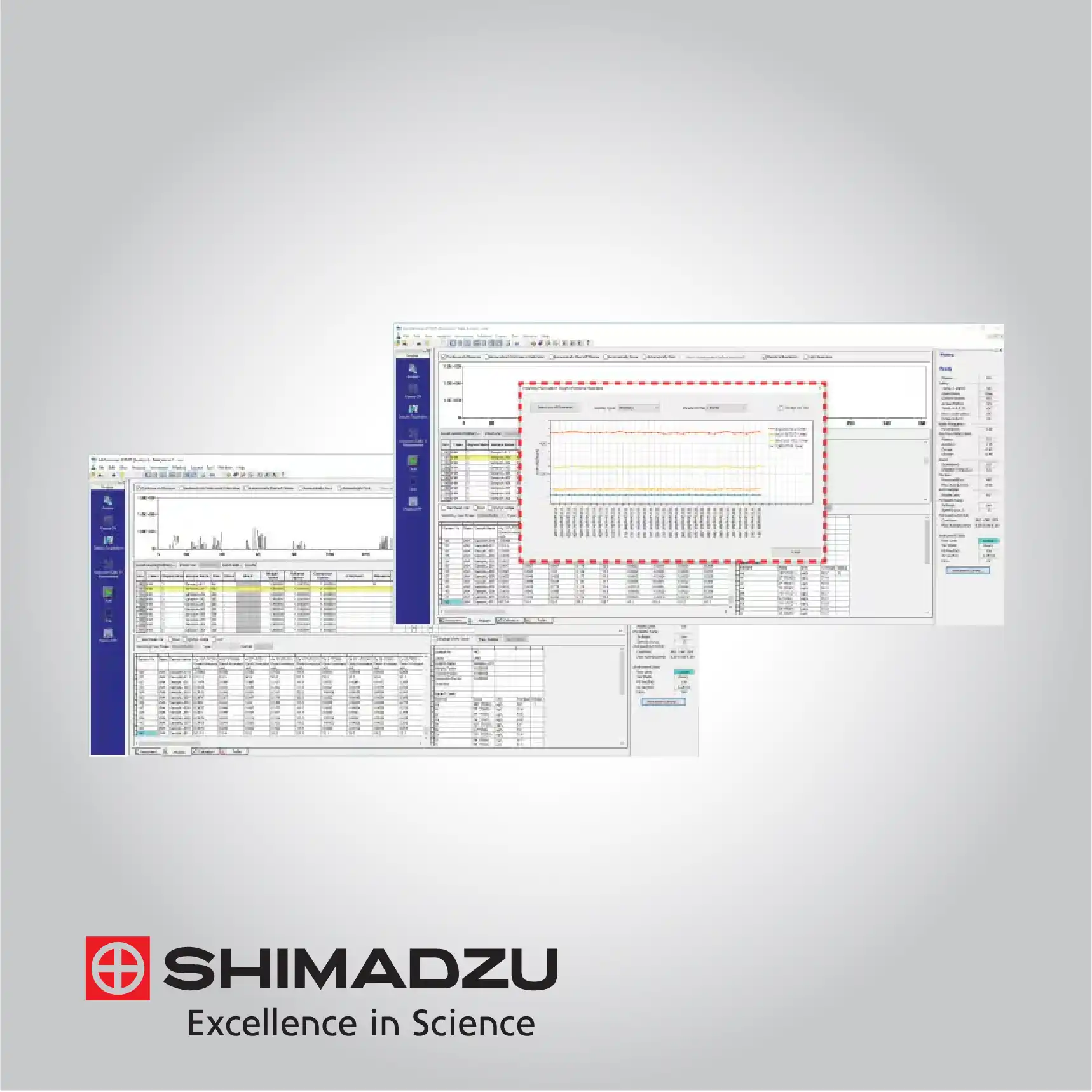
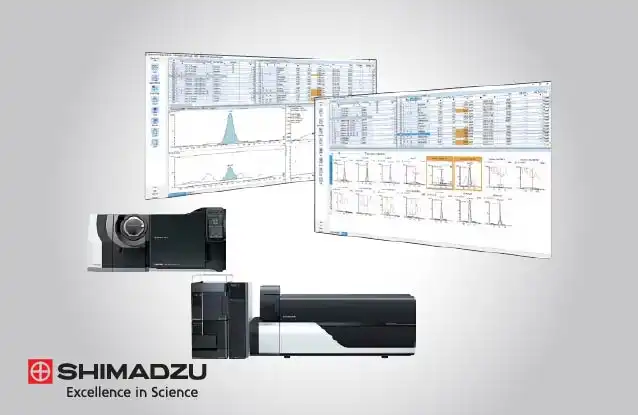
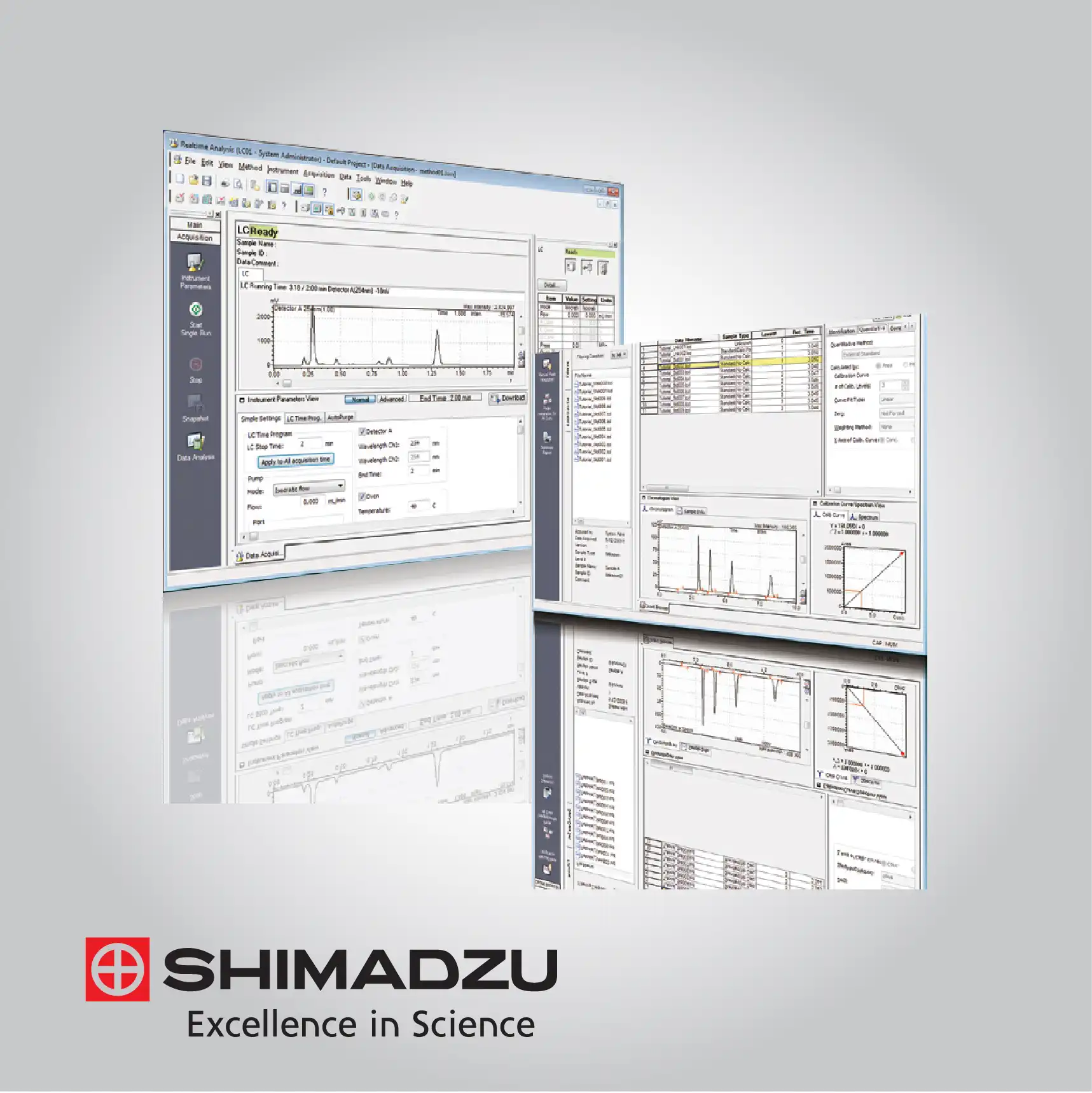
The software platforms accompanying the Q-TOF systems are technically equipped to handle the massive datasets generated by high-resolution mass spectrometry. Advanced algorithms are used for peak picking, deconvolution, and library searching. The software facilitates the identification of unknowns by comparing experimental accurate mass and fragment patterns against extensive databases. For regulated environments, the software ensures data integrity and traceability, supporting compliance with international standards like FDA 21 CFR Part 11.
Read more about Quadrupole Time-of-Flight LC-MS/MS here