.webp)
HPLC Solvents
|
High Purity

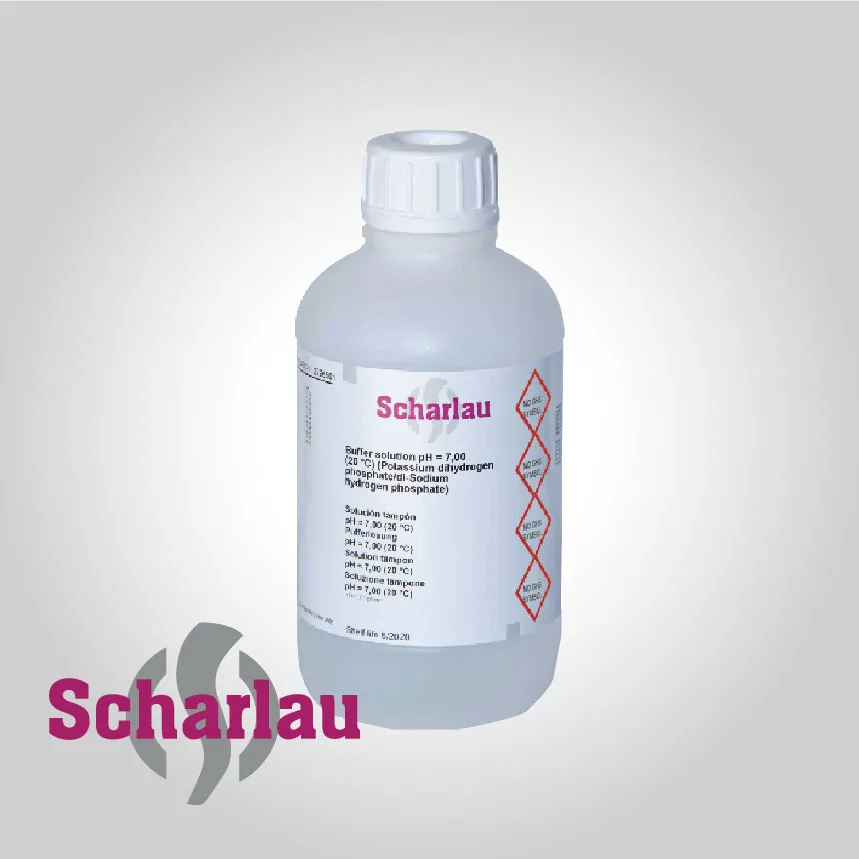
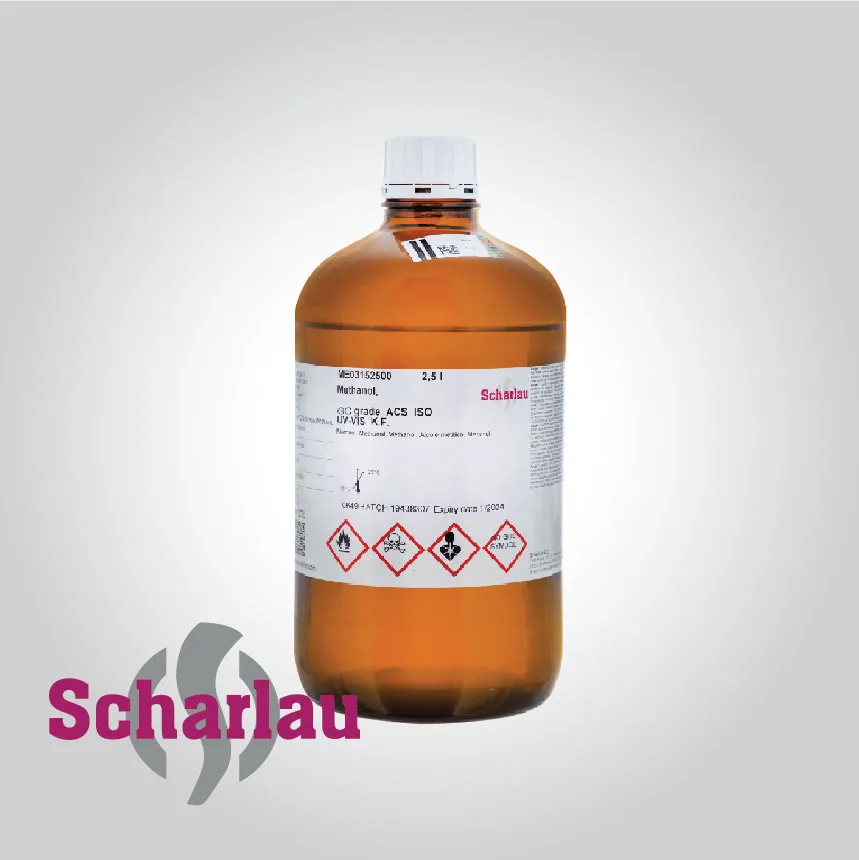
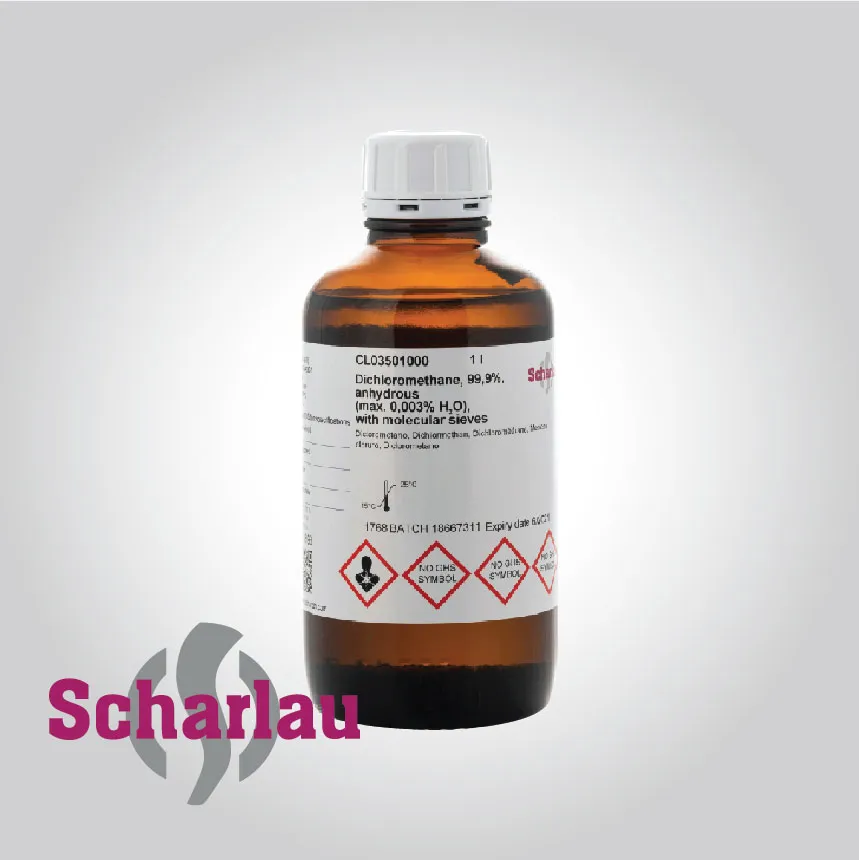
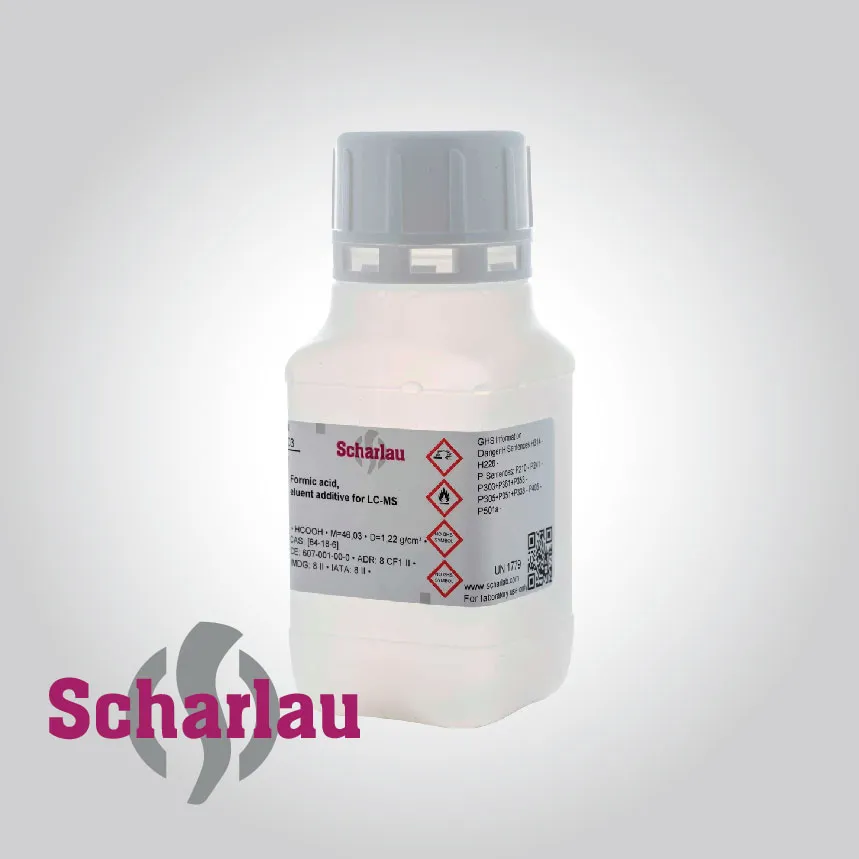
Scharlau HPLC Solvents
Scharlau HPLC solvents are meticulously engineered to satisfy the rigorous demands of high-performance liquid chromatography and ultra-high-performance liquid chromatography (UHPLC). These solvents are characterized by their extremely high chemical purity (typically ge 99.9%) and exceptionally low UV absorbance at critical wavelengths. The production process involves advanced distillation techniques that minimize the presence of volatile and non-volatile impurities, ensuring a flat baseline during gradient elutions.
Technically, Scharlau ensures that every batch of HPLC solvent undergoes stringent microfiltration through 0.2 mum or 0.1 mum filters. This critical step removes sub-micron particulates that could otherwise lead to increased backpressure, column clogging, or damage to delicate injector components. Furthermore, the solvents are characterized by strictly controlled water content and acidity levels, which are vital for maintaining the stability of the stationary phase and ensuring the reproducibility of retention times.
UV Transmittance and Cut-off Wavelength Precision
The technical quality of an HPLC solvent is primarily defined by its UV cut-off wavelength and transmittance percentage. Scharlau solvents are tested to ensure maximum transparency, particularly in the lower UV range 190 nm to 210 nm. High transmittance at these wavelengths is essential to minimize background noise, which directly improves the detection limit (LOD) and quantification limit (LOQ) for analytes that lack strong chromophores. Each batch is verified to ensure the absorbance drift remains within strictly defined milli-absorbance unit mAU limits.
Gradient Grade Baseline Stability
For complex separations requiring gradient elution, Scharlau offers Gradient Grade solvents specifically designed to prevent baseline drift. During a gradient run, where the ratio of organic solvent to aqueous buffer changes, any trace impurities in the solvent can accumulate and elute as "ghost peaks." These solvents undergo additional purification to eliminate such impurities, ensuring a stable, flat baseline even at high sensitivities and during rapid gradient shifts.
LC-MS Grade for Mass Spectrometry Compatibility
LC-MS grade solvents represent the highest tier of purity, designed to minimize ion suppression and background interference in mass spectrometry. These solvents are strictly controlled for trace metal ions (such as Na+ and K+), which can form adducts that complicate mass spectra. Furthermore, the specification includes testing for organic contaminants that could cause chemical noise in the mass detector, ensuring high signal-to-noise ratios for both positive and negative ionization modes.
Microfiltration and Column Longevity
To protect the high-performance capillary columns used in modern HPLC, all solvents are filtered through 0.2 mum membranes under cleanroom conditions. This removal of particulates is vital because even microscopic debris can lodge in the column frit, leading to asymmetrical peaks and shortened column life. For UHPLC applications, where sub-2 mum particle columns are used, solvents are filtered through even finer 0.1mum membranes to accommodate the higher sensitivity to contamination.
Control of Non-Volatile Residues
The presence of non-volatile residues (NVR) is a critical technical parameter, especially when using Evaporative Light Scattering Detectors (ELSD) or Mass Spectrometers. Scharlau solvents are processed to ensure that evaporation residues are kept at extremely low levels (typically 2 ppm. Low NVR prevents the accumulation of solid deposits in the detector’s nebulizer and flow cells, which maintains instrument uptime and prevents signal degradation over long analytical sequences.
Moisture Content and Karl Fischer Validation
Water content in organic HPLC solvents is measured using coulometric Karl Fischer titration. For many applications, particularly those involving normal-phase chromatography or moisture-sensitive mobile phases, low water content is essential. Scharlau anhydrous-grade HPLC solvents ensure that water levels are kept consistently low, preventing changes in solvent polarity that could lead to shifts in retention times and loss of chromatographic resolution.
Chemical Assay and Isocratic Consistency
For isocratic separations, consistency in the chemical assay (purity percentage) is paramount. Scharlau solvents maintain an assay of 99.9%, providing a reliable and stable mobile phase. This high degree of purity ensures that the physical properties of the solvent, such as viscosity and refractive index, remain constant across different batches. This consistency allows laboratories to transfer methods between different instruments and locations without the need for extensive re-validation.
Quality Assurance and Batch Traceability
Every bottle of Scharlau HPLC solvent is labeled with a specific batch number that provides full traceability to its production and analytical history. Certificates of Analysis (CoA) are provided, detailing the actual measured values for UV transmittance, water content, acidity, and residue after evaporation. This documentation is essential for laboratories operating under GLP, GMP, or ISO 17025 standards, providing the necessary audit trail for quality compliance.
Read more about Scharlau HPLC Solvents