
General Chemicals
|
For most applications

Scharlau General Chemicals
Scharlau general chemicals encompass a vast portfolio of laboratory reagents and technical-grade substances tailored for diverse industrial and scientific applications. These chemicals are categorized based on their intended use, ranging from routine laboratory tasks to highly sensitive analytical procedures. The technical specifications of these reagents adhere to internationally recognized purity standards, such as the American Chemical Society (ACS) and ISO guidelines. By maintaining strict control over impurity levels, Scharlau ensures that their acids, bases, and salts provide the chemical stability required for reproducible results in research, quality control, and educational environments.
The manufacturing and distribution of Scharlau chemicals are underpinned by a rigorous quality management system that guarantees batch-to-batch consistency. Every product is accompanied by comprehensive documentation, including detailed Certificates of Analysis (CoA) and Safety Data Sheets (SDS) that comply with Global Harmonized System (GHS) regulations.
Purity Grades and International Compliance Standards
The classification of Scharlau chemicals is defined by specific purity grades, which indicate the suitability of a reagent for various tasks. The "Analytical Grade" is technically refined to meet ACS and ISO requirements, ensuring minimal trace impurities. For pharmaceutical applications, Scharlau provides grades that comply with European Pharmacopoeia (Ph. Eur.) and United States Pharmacopeia (USP) standards. These stringent classifications ensure that the chemical profile matches the sensitivity of the intended application, whether it be for trace metal analysis or large-scale synthesis.
High-Purity Acids and Bases for Critical Analysis
Scharlau’s portfolio includes a comprehensive range of inorganic acids and bases, such as Hydrochloric Acid, Sulfuric Acid, and Sodium Hydroxide. These substances are manufactured using advanced distillation and purification techniques to reduce metallic and organic impurities to parts-per-million (ppm) or parts-per-billion (ppb) levels. These high-purity reagents are essential for pH adjustment, sample digestion, and as mobile phase components in chromatography, where the absence of background interference is critical for signal accuracy.
Laboratory Salts and Inorganic Reagents for Synthesis
Inorganic salts, including carbonates, chlorides, and sulfates, form the backbone of many chemical reactions. Scharlau ensures that these salts possess excellent solubility and stability profiles. The technical process involves rigorous filtration and crystallization steps to ensure that the solid reagents are free from moisture and secondary ion contamination. These salts are widely used as catalysts, buffer components, or starting materials in complex chemical syntheses, where precise stoichiometry depends on the purity of the reagent.
Technical Specifications and Certificate of Analysis (CoA)
Every batch of Scharlau chemicals undergoes comprehensive laboratory testing before being released for distribution. The technical data gathered during these tests is summarized in a Certificate of Analysis (CoA). This document provides exact measurements for parameters such as assay percentage, density, boiling point, and maximum allowable limits for specific impurities like heavy metals. This detailed reporting allows analytical chemists to perform drift corrections and ensure that reagent performance aligns with the requirements of sensitive instrumentation.
Advanced Packaging and Storage Stability
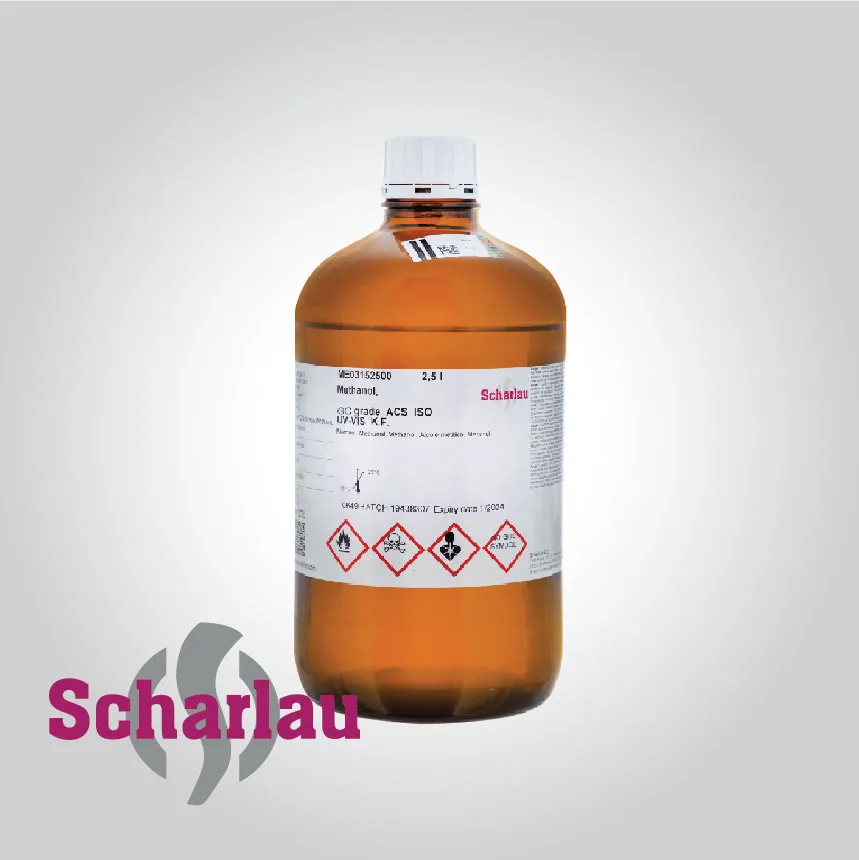
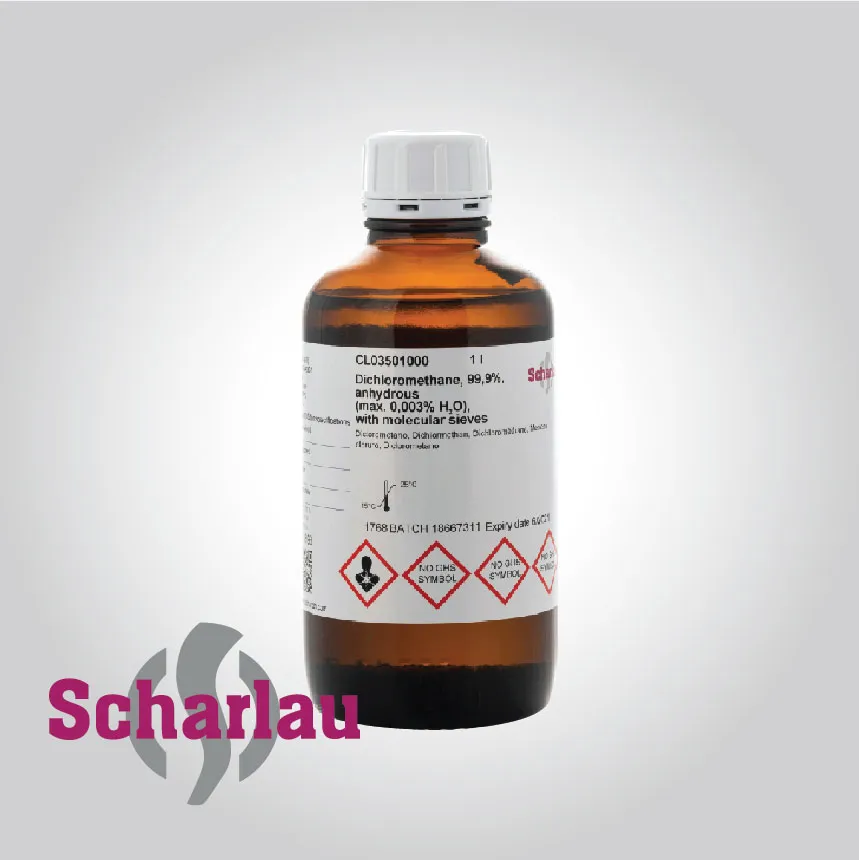
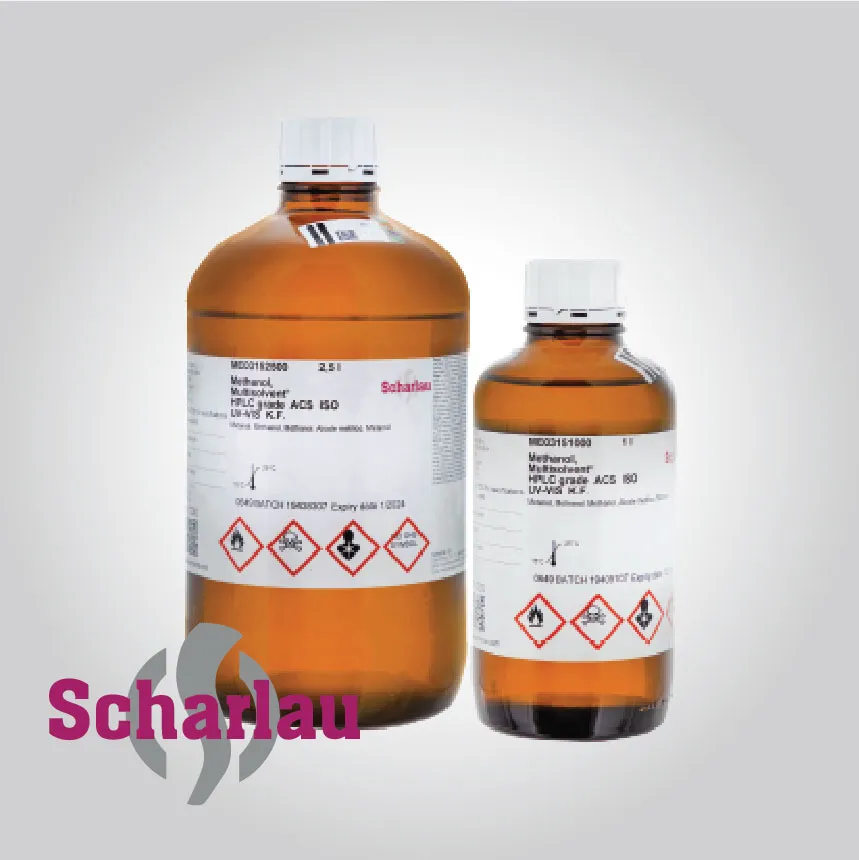
Chemical stability is heavily influenced by the type of container used. Scharlau utilizes specialized packaging materials, including amber glass for light-sensitive reagents and high-density polyethylene (HDPE) for corrosive substances. For hygroscopic materials, induction-sealed caps are used to prevent atmospheric moisture from degrading the product. These technical packaging solutions extend the shelf life of the chemicals and protect the integrity of the reagent during transport and long-term storage in laboratory conditions.
Safety Labeling and GHS Compliance
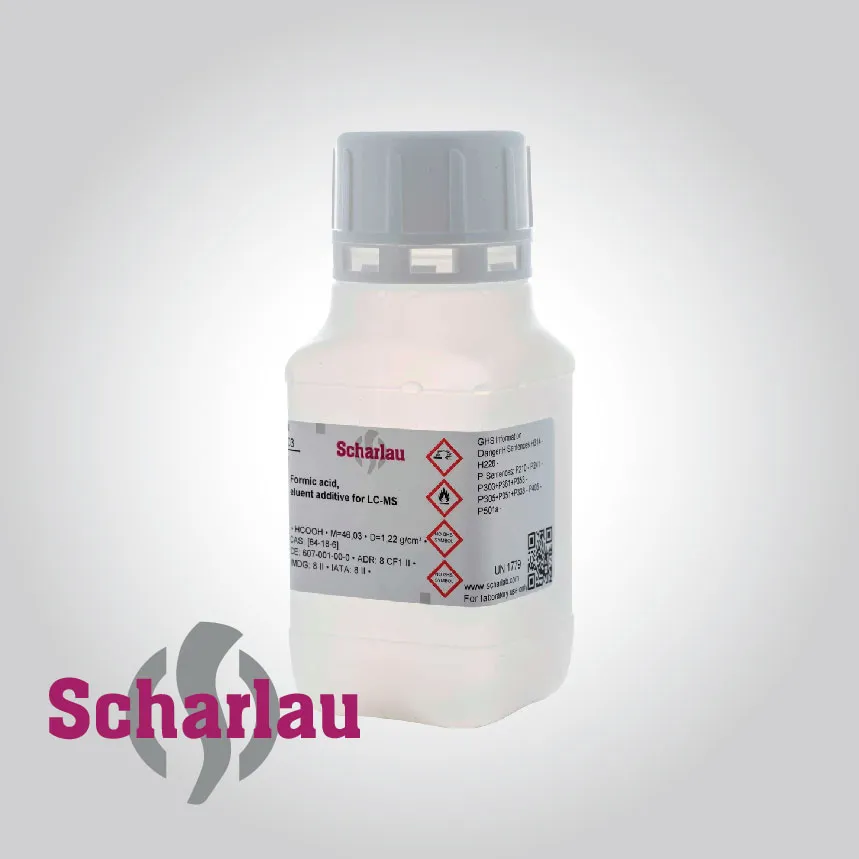
The handling of general chemicals requires strict adherence to safety protocols. Scharlau implements the Global Harmonized System (GHS) for labeling, which includes standardized pictograms, signal words, and hazard statements. This technical approach to labeling ensures that laboratory personnel are immediately aware of risks such as toxicity, flammability, or corrosivity. Detailed Safety Data Sheets (SDS) are provided for every chemical, offering technical guidance on spill containment, personal protective equipment (PPE), and emergency response procedures.
Buffers and Standardized Solutions for Calibration
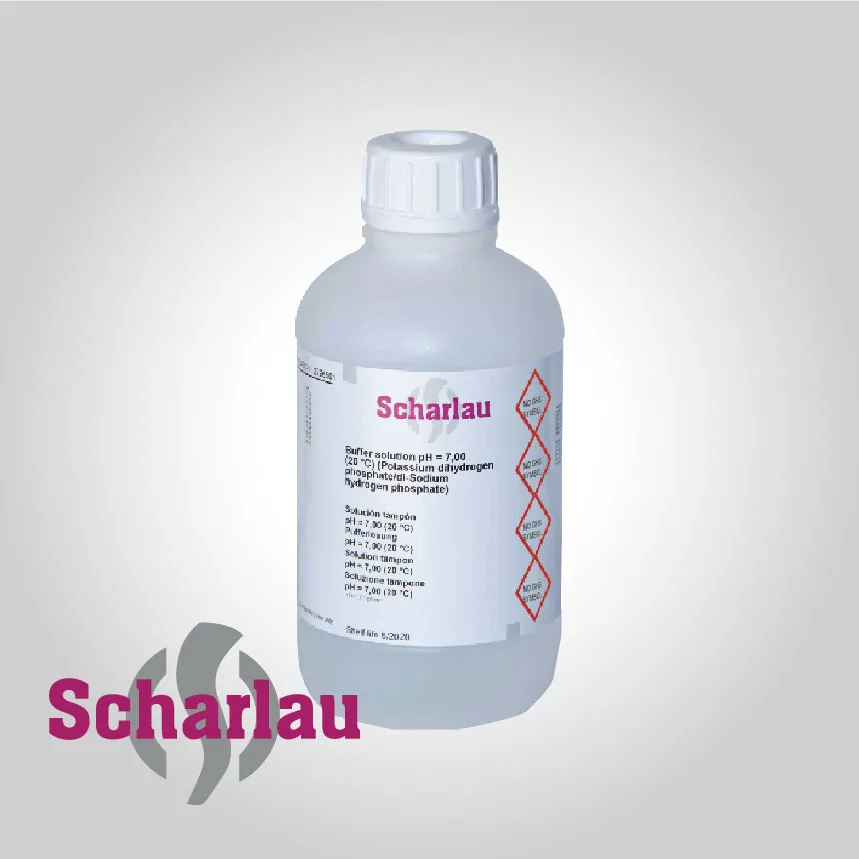
To support accurate measurements, Scharlau offers a range of standardized solutions and buffer concentrates. These products are technically prepared to provide exact molarities or pH values, traceable to primary standards. These solutions are vital for the calibration of pH meters, titrators, and spectrophotometers. The precision of these volumetric solutions reduces human error in the laboratory, as the preparation and validation are performed under controlled industrial conditions with certified accuracy.
Quality Management Systems and ISO Certification
The reliability of Scharlau chemicals is rooted in their ISO 9001 and ISO 14001 certifications. These international standards govern the entire life cycle of the chemical, from raw material sourcing to final product testing. The technical audits required for these certifications ensure that manufacturing processes are optimized for safety and quality. This systematic approach allows for full traceability; using the batch number provided on the label, a user can trace the entire production history and testing results of any chemical in the catalog.
Read more about Scharlau General Chemicals